
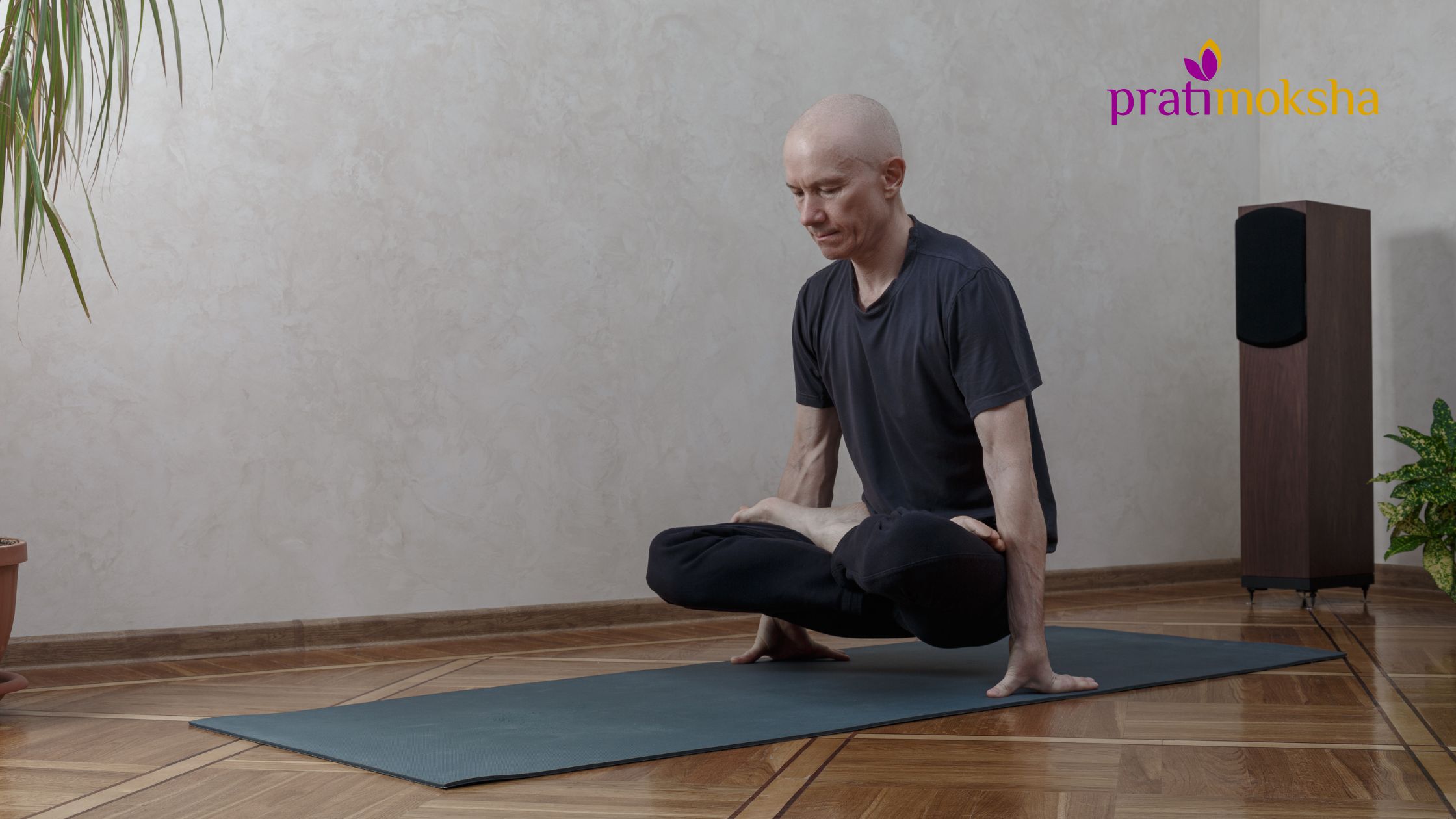
A student can practice yoga for years and never actually do yoga. Not once.
That’s not a criticism. It’s what happens when the practice gets sold, and bought, as exercise. A 2024 study in Frontiers in Psychology found that extrinsic motivation, things like weight loss or appearance, drives people to start a fitness habit, but intrinsic motivation is what decides whether they’re still doing it a year later. Older research in Psychology of Sport and Exercise found the same split. External goals get people through the door. They rarely keep people in the room.
Framed as exercise, yoga follows the exact same pattern. It works, right up until the external reason stops feeling urgent enough to justify showing up.
In Dubai, that framing is everywhere. Yoga sits on class schedules next to spin and boot camp, marketed the same way: burn this many calories, gain this much flexibility. None of that is wrong to want. It’s just not the whole thing.
What “exercise” leaves out
Flexibility. Calories. A longer streak of classes attended. These are the metrics exercise gives you.
None of them capture what yoga is actually for. Patanjali’s Yoga Sutras describe the goal of practice as stilling the fluctuations of the mind. Not conditioning the body. The postures were always a means, never the point.
Lalitha Viswanath has taught this distinction for close to two decades. A student practicing yoga as exercise is trying to change what their body can do, she says. A student practicing yoga as yoga is trying to change their relationship to effort and discomfort while both are present. Same movements. Completely different project.
Where the exercise framing usually breaks
It holds until results plateau. Or an injury interrupts things. Or life gets busier and the original reason, weight loss, a fitness goal, quietly stops being urgent.
Dubai’s pace speeds this up. Someone managing back-to-back meetings across Business Bay or DIFC doesn’t need much of an excuse to skip a class once attending starts to feel optional.
This is usually where a practice either ends or changes shape. Students who make it past this point describe a different reason for coming back. Less about physical outcome. More about relief, or clarity, or a steadiness that carries into the rest of the day.
What replaces it
A few things shift, rarely all at once.
Attention moves from performance to sensation. What a posture actually feels like, not whether it looks right. Breath becomes worth noticing on its own, not just a tool to deepen a stretch. Progress stops being flexibility gained and starts being something harder to measure: how someone handles a delayed flight, or a difficult meeting, or an argument they didn’t see coming.
None of this comes from deciding to think differently. It comes from sustained practice, usually with real structure behind it. That’s part of why philosophy is woven into Pratimoksha’s regular yoga classes from the first session, not saved for advanced students only.
Why this shift often needs a different format
A group class is built around the middle of the room. A student who has moved past the exercise mindset often wants more than that format was designed to give: more depth, more silence, more room for the internal side of practice.
That’s one reason the individual program exists, built around a single student’s pace instead of a room full of different goals. It’s also why many students at this stage eventually move toward the signature program, where the physical practice becomes a doorway into breath work and meditation, rather than the whole practice on its own.
What doesn’t change
The physical benefits don’t disappear. Strength, mobility, balance, they still develop. Often more consistently, because the practice no longer gets abandoned the moment progress plateaus.
What changes is the reason someone keeps showing up. And reasons rooted in something internal tend to outlast reasons tied to a number on a scale.
For a lot of Dubai residents, used to fitness built around visible outcomes, that shift can feel disorienting at first. It’s also, by most accounts from long-term students, the point where practice stops feeling like a task and starts feeling worth the time.
There’s no schedule for when this happens. For anyone curious what practice feels like once it stops being about output, a conversation with a teacher at Pratimoksha’s studio in Oud Metha is a reasonable place to start. A trial session is a direct way to notice the difference firsthand.



0 Comments