
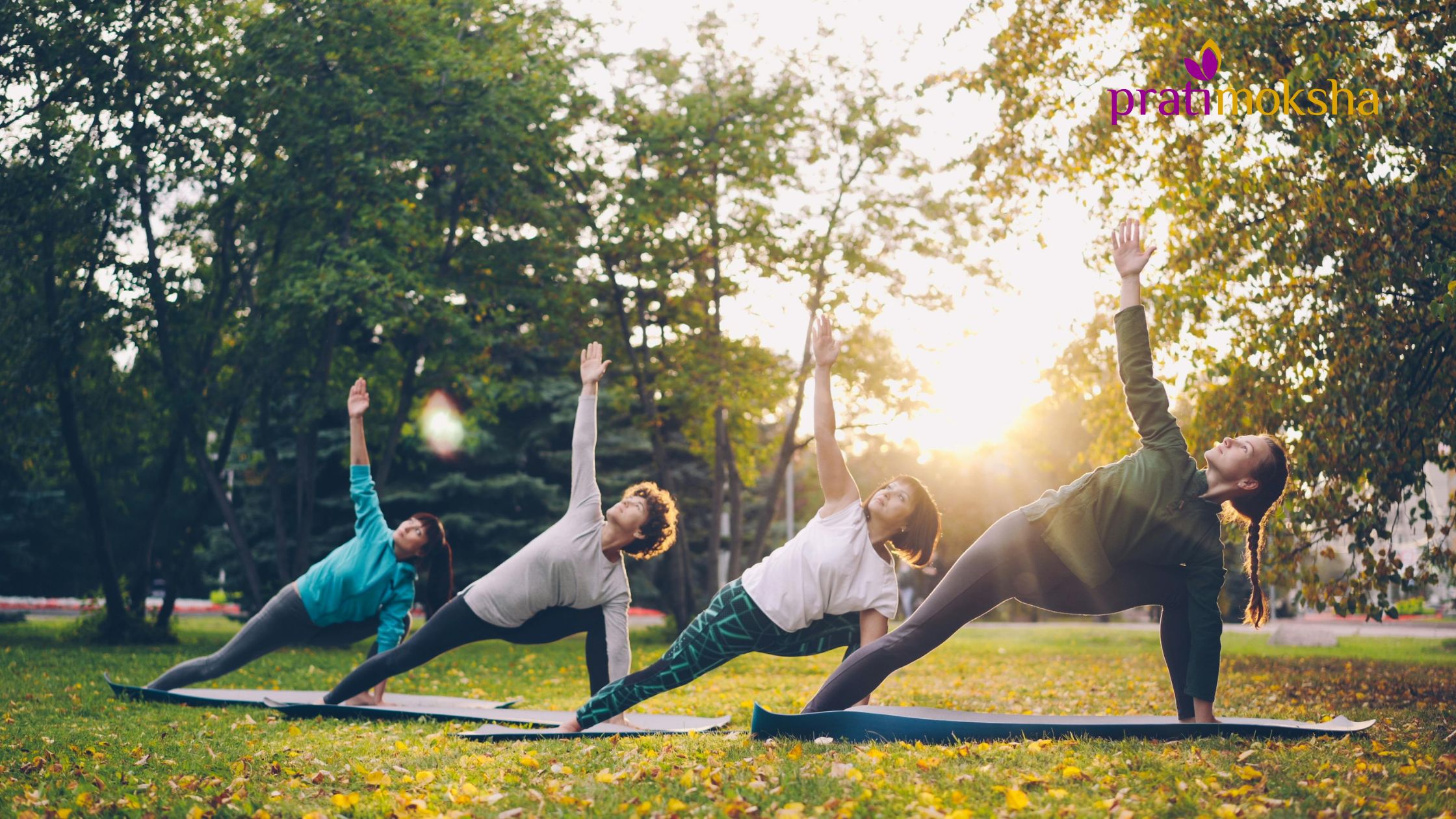
Most people practicing yoga today are working with one limb out of eight. Just the third one, actually — asana, the physical postures. The other seven exist, are taught in classical texts, and have measurable effects on how a person thinks, responds, and lives. They are also almost entirely absent from how yoga is presented, discussed, and sold in most modern contexts.
This is not a criticism of asana. Physical practice is a legitimate and valuable entry point. But treating it as the whole system is a bit like using a library only for its chairs.
The eight limbs come from Patanjali’s Yoga Sutras, compiled around 200 BCE. Patanjali didn’t invent yoga — he organized existing teachings into a coherent framework. The system he described is called Ashtanga, from the Sanskrit ashta (eight) and anga (limb). It outlines a complete path: ethical conduct, personal discipline, physical practice, breath regulation, sensory withdrawal, concentration, meditation, and finally samadhi, a state of absorbed awareness that most practitioners will approach but few will claim to have reached. The limbs are not rungs on a ladder to be climbed sequentially and left behind. They are more like simultaneous dimensions of a single practice — each one informing the others.
Why the non-physical limbs matter practically
A 2022 randomized controlled trial from Charité — Universitätsmedizin Berlin, published in the Journal of Clinical Medicine, compared three groups: one practicing integrative yoga that combined physical postures with mindfulness and the ethical and philosophical dimensions of traditional yoga, one practicing Iyengar yoga focused primarily on physical exercises, and one practicing mindfulness training without movement. After twelve weeks, the integrative group showed the greatest reductions in perceived stress. The philosophical and ethical dimensions weren’t decorative. They were doing work.
That finding has obvious relevance for anyone who has practiced yoga regularly and noticed that the physical benefits plateau in ways the practice itself doesn’t seem to. The body gets stronger, more flexible, more capable — and then what? The answer the tradition has always offered is that the practice was never only about the body.
The first two limbs: how you behave
Yama and niyama — the first and second limbs — deal with conduct. Yama covers how a person relates to others: non-harming, truthfulness, non-stealing, restraint, and non-possessiveness. Niyama covers the relationship with oneself: cleanliness, contentment, discipline, self-study, and surrender to something larger than personal ambition.
These are not rules handed down from above. They are observations about what sustainable, undistracted practice requires. A person whose daily life is built on dishonesty or chronic acquisitiveness brings that texture to the mat, whether they’re aware of it or not. The first two limbs ask practitioners to examine that texture honestly, not as moral judgment but as practical preparation.
In Dubai, where professional life often rewards qualities that yama and niyama quietly push back against — aggressive acquisition, strategic self-presentation, relentless productivity — these limbs can feel more countercultural than the headstands.
The middle limbs: body and breath
Asana is the third limb. Pranayama — breath regulation — is the fourth. At Pratimoksha, both are taught as disciplines in their own right, not as warm-ups or cooldowns. Lalitha Viswanath approaches pranayama in particular as a practice that requires as much attention and care as the physical postures — something developed gradually, over time, with appropriate guidance, not something layered onto an asana class as an afterthought.
Pratyahara, the fifth limb, is withdrawal of the senses. This is the bridge between the outer and inner practices — the deliberate turning of attention away from external stimulation and toward interior experience. It is arguably the limb most relevant to modern life and the least addressed in modern practice. The ability to sit with reduced sensory input, without reaching for a phone or a distraction, is both rarer and more valuable than it sounds.
The inner limbs: where the practice goes
The final three — dharana (concentration), dhyana (meditation), and samadhi (absorbed awareness) — are the destinations toward which everything else points. Yoga classes at Pratimoksha treat these not as advanced electives but as the natural continuation of what the physical and ethical practices prepare the ground for.
Dharana and dhyana are explored directly through Pratimoksha’s Dhyana meditation workshop, which approaches meditation not as a relaxation technique but as a practice with its own demands, methods, and progression. The distinction matters: relaxation is a byproduct of good meditation, not its goal.
What changes when you take the whole system seriously
Students who engage with yoga beyond asana tend to describe a similar shift: the practice stops being something they do and starts being something they live inside. Decisions feel different. Reactions have more space around them. The qualities cultivated on the mat — steadiness, attention, restraint — begin appearing in situations that have nothing to do with yoga.
This is not mysticism. It is what a coherent system of self-development produces when practiced consistently over time. The eight limbs work together because they were designed to work together. Using one without the others is not wrong. It is simply incomplete.
If you’d like to explore what a practice grounded in the full scope of the tradition looks like, the yoga styles at Pratimoksha offer a starting point. And if you’d like to experience it firsthand before committing to anything, a trial session is the most honest next step available.


0 Comments