
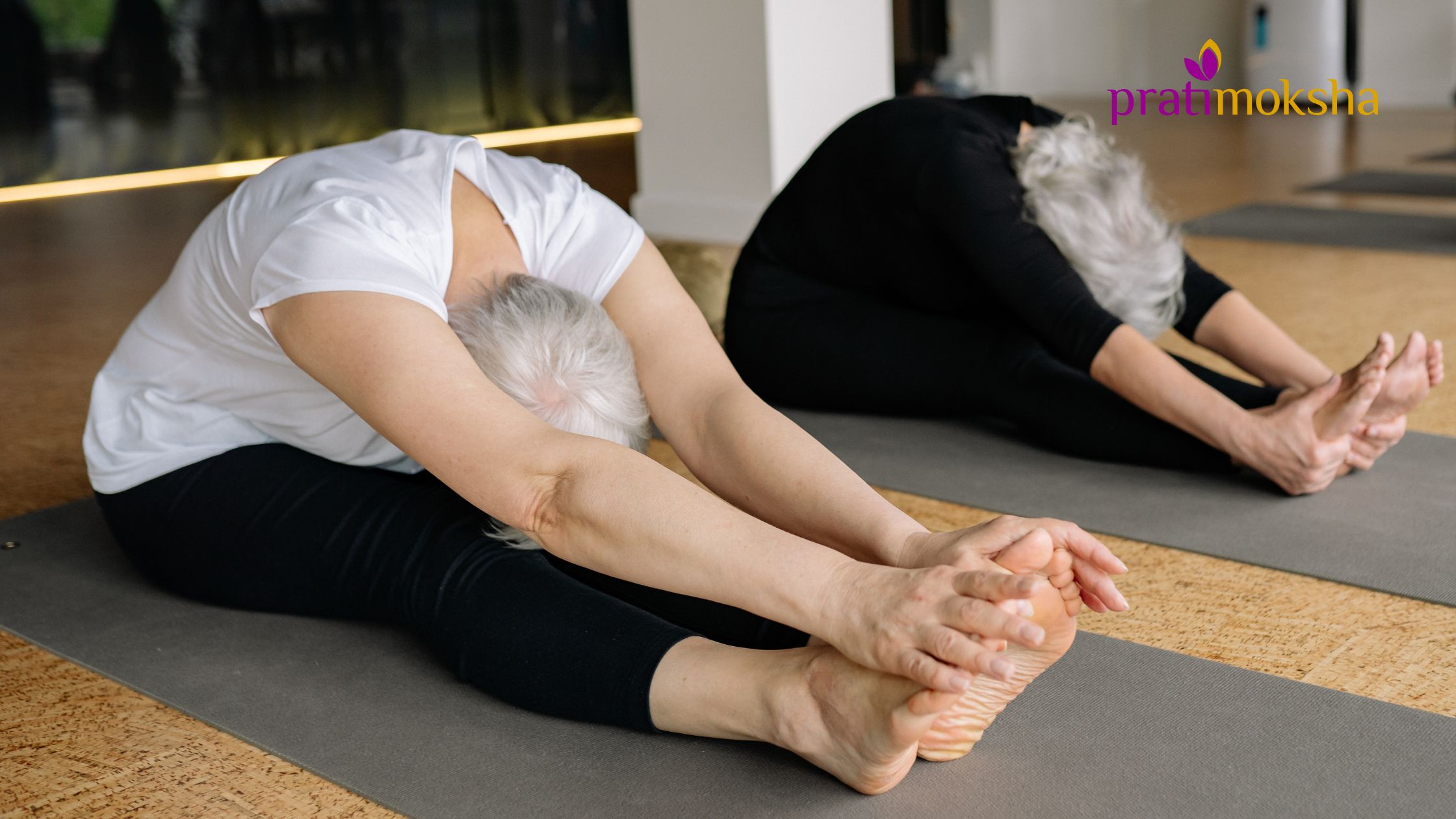
Most yoga classes operate on a single assumption: that what works for one body works for all of them. Same sequence, same pace, same instruction — delivered to a room of people whose constitutions, energy levels, digestive patterns, and stress responses differ significantly from one another. For a general class, this is a practical necessity. As a long-term approach to practice, it has real limitations.
Ayur yoga addresses this directly. It is the meeting point of two classical Indian systems — Ayurveda, the traditional science of life and health, and yoga, the discipline of awareness and self-regulation. Neither is new. The Charaka Samhita, one of Ayurveda’s foundational texts, dates to roughly the 2nd century BCE. What Ayur yoga does is bring them into deliberate conversation: your constitution shapes your practice, not the other way around.
Research published in the Journal of Ayurveda and Integrative Medicine in 2020 found that Ayurvedic constitution-based interventions, including tailored movement and breathwork, produced better outcomes for chronic stress and fatigue management than non-individualized approaches. For professionals managing demanding schedules in a city like Dubai, where the pace of work rarely adjusts to how a person actually feels on a given day, that finding has obvious relevance.
The three doshas, briefly
Ayurveda organizes human constitution around three fundamental energies called doshas — Vata, Pitta, and Kapha. Every person carries all three, but in different proportions, and that proportion shapes almost everything: how energy is generated and spent, how the body responds to heat and cold, how the mind processes stress, how digestion works, what kinds of imbalance are most likely to arise.
- Vata is associated with air and space — light, mobile, creative, and when out of balance, anxious, scattered, and prone to dryness and irregular energy.
- Pitta is associated with fire and water — focused, driven, sharp, and when out of balance, irritable, overheated, and prone to inflammation and burnout.
- Kapha is associated with earth and water — steady, calm, nourishing, and when out of balance, sluggish, heavy, and resistant to change.
Most people are a combination of two, with one typically dominant. These are not personality types in the pop-psychology sense. They are functional descriptions of how a body-mind system operates under different conditions.
What this means for yoga practice
A Vata-dominant person and a Pitta-dominant person sitting next to each other in the same Vinyasa class are having entirely different experiences — and arguably, neither is receiving exactly what they need. The Vata type, already prone to scattered energy and instability, may find fast-paced movement aggravating rather than grounding. The Pitta type, already running hot and driven, may push through a strong practice on a day when stillness would serve them far better.
Ayur yoga works with these differences deliberately. Practice is designed not just around what a student can do, but around what their constitution currently needs. A Vata-dominant student might be guided toward slower, more grounding sequences with longer holds, an emphasis on warmth, and breathwork that settles the nervous system. A Pitta type might work with cooling practices, less competitive intensity, and postures that release heat from the liver and solar plexus region. A Kapha type often benefits from more vigorous, stimulating movement that counteracts the tendency toward heaviness and inertia.
Lalitha Viswanath approaches Ayur yoga as a genuinely individualizing practice — one that requires the teacher to understand not just anatomy but temperament, seasonal influence, and the student’s current state rather than their baseline constitution alone. What a person needs in Dubai’s summer heat, when Pitta is naturally elevated in almost everyone, differs from what they need in the cooler winter months when Vata tends to rise.
Why season and climate matter
This is where Ayur yoga becomes particularly practical for Dubai residents. Ayurveda has always treated environment as a significant variable in health. The extreme heat of a Dubai summer is not neutral — it aggravates Pitta, depletes moisture, and places real demands on the cardiovascular system. A practice designed without awareness of this can inadvertently add heat to a system that is already running too hot.
Conversely, the heavy air-conditioning that makes indoor life bearable in summer creates its own Vata aggravation — dry air, cold environments, and the slight shock of moving between extreme temperatures. An Ayur yoga practice accounts for these environmental factors as a matter of course, adjusting emphasis across seasons rather than delivering the same program year-round.
The difference from a standard individual program
An individual program at Pratimoksha is tailored to a student’s goals, physical condition, and learning pace. Ayur yoga goes a layer deeper — it introduces constitution as a primary organizing principle. The question is not just what this person wants to achieve, but what their fundamental nature requires in order to stay balanced while pursuing it.
For students who have practiced other yoga styles for some time and found them only partially satisfying — effective in some ways, missing something in others — Ayur yoga often answers a question they hadn’t quite formed yet. The practice that suits your constitution is not necessarily the one that challenges you most. Sometimes it is the one that finally works with your nature rather than against it.
A more honest starting point
There is something genuinely useful about a system that begins by asking what kind of person you are before it tells you what to do. Most fitness approaches start with the goal and work backward. Ayurveda starts with the constitution and works forward — which means the practice it recommends is less likely to create new imbalances while resolving old ones.
If the idea of a practice shaped around your individual constitution rather than a generic template is something you want to explore, Ayur yoga at Pratimoksha is a practical place to begin. A trial session will give you a clearer sense of how it works in practice, not just in principle.




0 Comments