
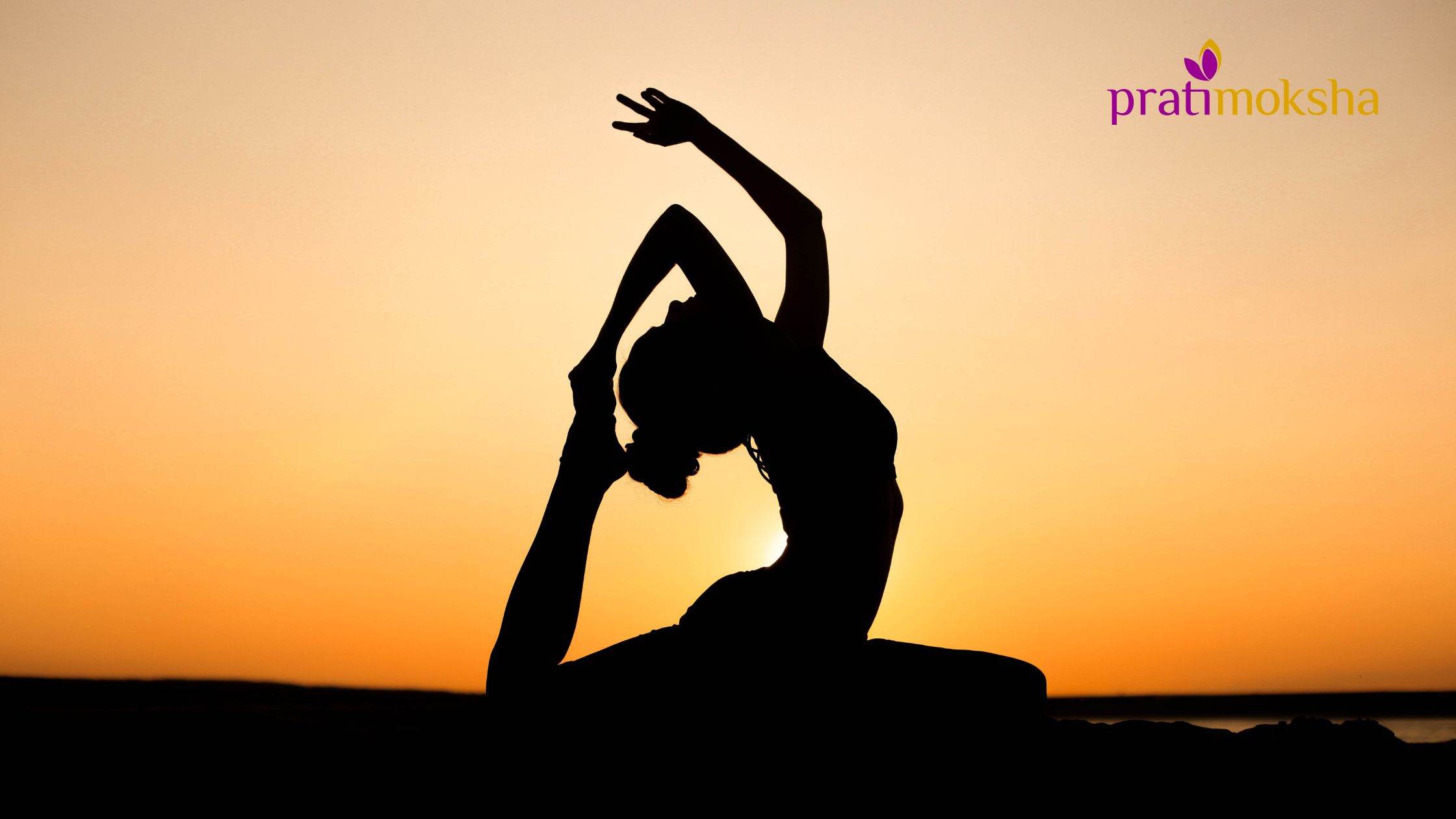
Somewhere around the second year of steady practice, a familiar frustration sets in. The poses that once felt impossible now feel routine. The breath is steadier. The body is stronger. And yet something is missing, though it’s hard to name exactly what.
This is not a rare experience. A 2024 peer-reviewed study of UAE workers found that 56.8 percent reported moderate-to-high occupational stress tied to organizational conflict, while 66.6 percent reported the same for individual demands — the everyday friction of deadlines, expectations, and the mental load that comes with living fast. For many students at Pratimoksha, that pressure is exactly what first brought them onto the mat. The question is what happens after the basics have been mastered and the pressure hasn’t gone away.
That question is what the Asana & Beyond program was built to answer.
What the program actually is
Asana & Beyond is not a harder version of a regular yoga class. It’s a structured deepening of practice for students who have already built a foundation in posture work and are ready to understand why the postures exist at all.
Classical yoga treats asana as one limb among eight, not the entire discipline. Most beginner and intermediate classes, understandably, focus almost entirely on the physical form because that’s where a new student’s attention naturally goes. Asana & Beyond shifts that focus. The postures are still there, but they become a doorway into subtler work: breath control, internal awareness, and the discipline of staying present inside difficulty rather than rushing past it.
Lalitha Viswanath, who has spent close to two decades teaching classical yoga in Dubai, built the program around a principle she returns to often in her own teaching: technique without understanding eventually plateaus. A student can perfect the shape of a pose and still be practicing on autopilot. The program is designed to interrupt that autopilot.
Who this is actually for
Asana & Beyond is not for beginners, and it’s honestly not meant to be. It works best for people who already have a working relationship with their own body on the mat and are frustrated by the ceiling they’ve hit.
Some markers that a student is ready:
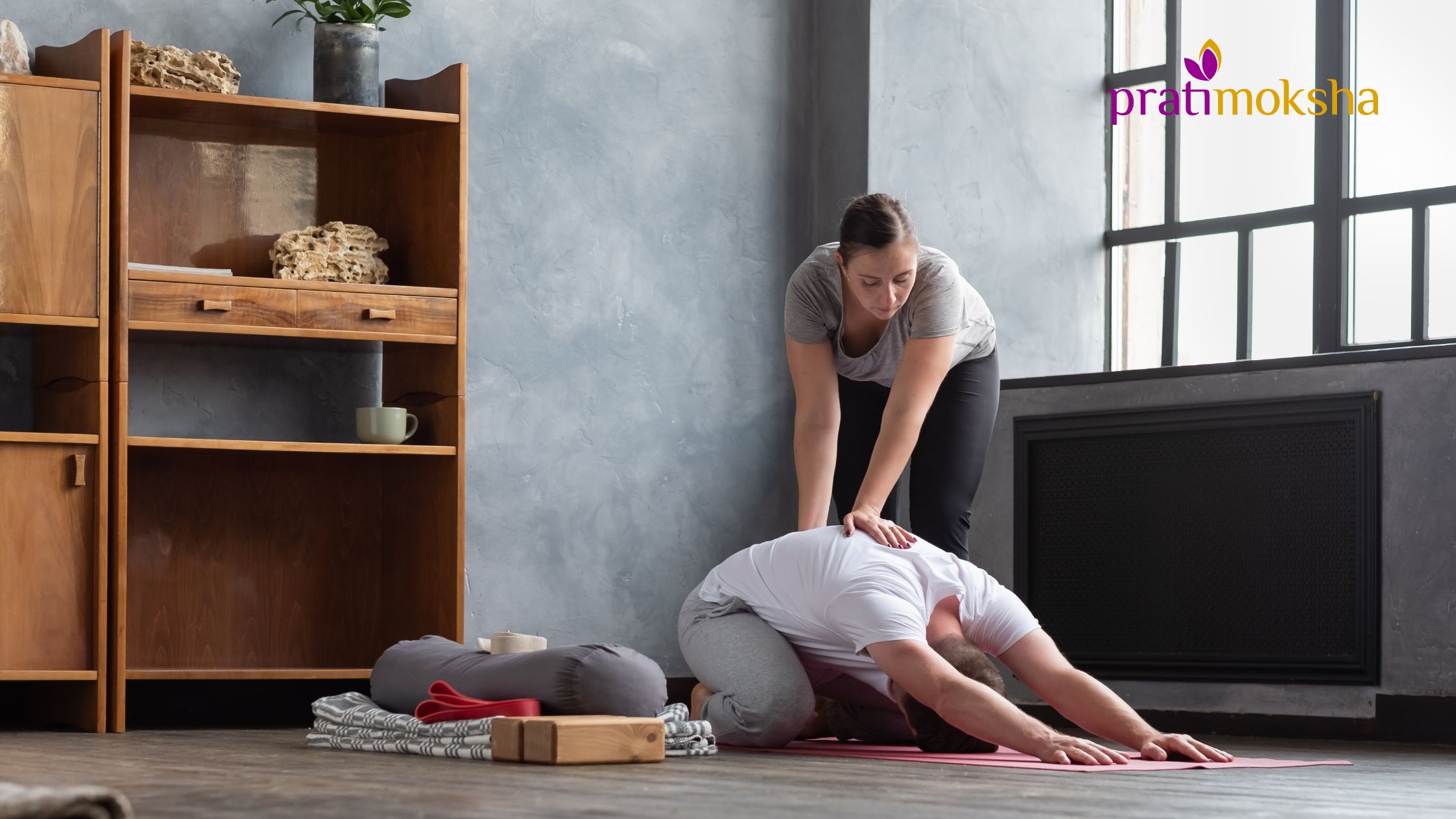
- They can hold foundational postures with reasonable stability, without needing constant correction
- They’ve noticed their practice has become repetitive rather than developing
- They’re curious about the philosophy behind the physical work, not just the physical work itself
- They want structured guidance rather than open-ended self-practice
- They’ve completed a period of consistent classes, typically through the studio’s core yoga classes, and are looking for the next stage
It’s worth being direct about who this program is not for. A student who has practiced twice a month for a few weeks isn’t going to get much from Asana & Beyond, and pushing them into it early usually backfires. Depth work requires a base to deepen. Without one, the more advanced material has nothing to attach to.
How Dubai’s pace shapes the program
Dubai rewards speed. Careers move quickly, schedules are dense, and there’s a constant undertow toward doing more in less time. That culture isn’t inherently bad, but it does create a specific kind of practitioner: someone who wants results, wants them fast, and often brings that same urgency onto the mat.
Asana & Beyond works against that instinct, deliberately. Sessions are structured to slow the pace of attention even while the physical work continues. For students who spend their weekdays in back-to-back meetings across Business Bay or DIFC, that shift in pace is often the most difficult part of the program and, by most accounts, the most valuable.
The class schedule itself is built with Dubai’s working rhythms in mind. Sessions are timed around the hours professionals can realistically commit to, rather than assuming an idealized schedule nobody actually has. It’s a small design choice, but it reflects the same philosophy that runs through the rest of the studio: build a practice around real life, not around an imagined version of it.
What a session actually looks like
There’s no single format, and that’s intentional. Some sessions center on extended holds designed to test composure under physical fatigue. Others focus almost entirely on breath, using posture as a stabilizing frame rather than the main event. A few are built around silence and internal observation, with very little physical movement at all.
What stays consistent is the demand for attention. Students are asked, repeatedly, to notice what’s happening in their own mind when the practice gets uncomfortable. That’s a different skill from flexibility or strength, and for many students, it’s the harder one to build.
Where this leads
Asana & Beyond is often the point where students start asking bigger questions about their practice. Some move toward the studio’s signature program track more broadly, exploring breathwork and meditation as standalone disciplines. Others simply want to keep deepening the physical practice without ever moving into teaching or philosophy in a formal way. Both paths are valid, and the program doesn’t push students toward one over the other.
For a smaller number, this becomes the beginning of something more personal. When a student’s goals genuinely diverge from what a group class can offer, Pratimoksha often shifts them into the individual program, where the pace and focus can be built entirely around them.
There’s no fixed timeline for any of this. Some students spend a year in Asana & Beyond before moving further. Others stay for years, finding that the depth of the work itself is enough. Progress in this discipline was never meant to be measured against a clock.
If the plateau sounds familiar, and if the idea of practicing with more intention rather than more effort makes sense, it might be worth experiencing a session firsthand. Pratimoksha’s studio in Oud Metha runs regular sessions, and a trial class is the simplest way to find out whether this stage of practice is the right one for you.Q


0 Comments