
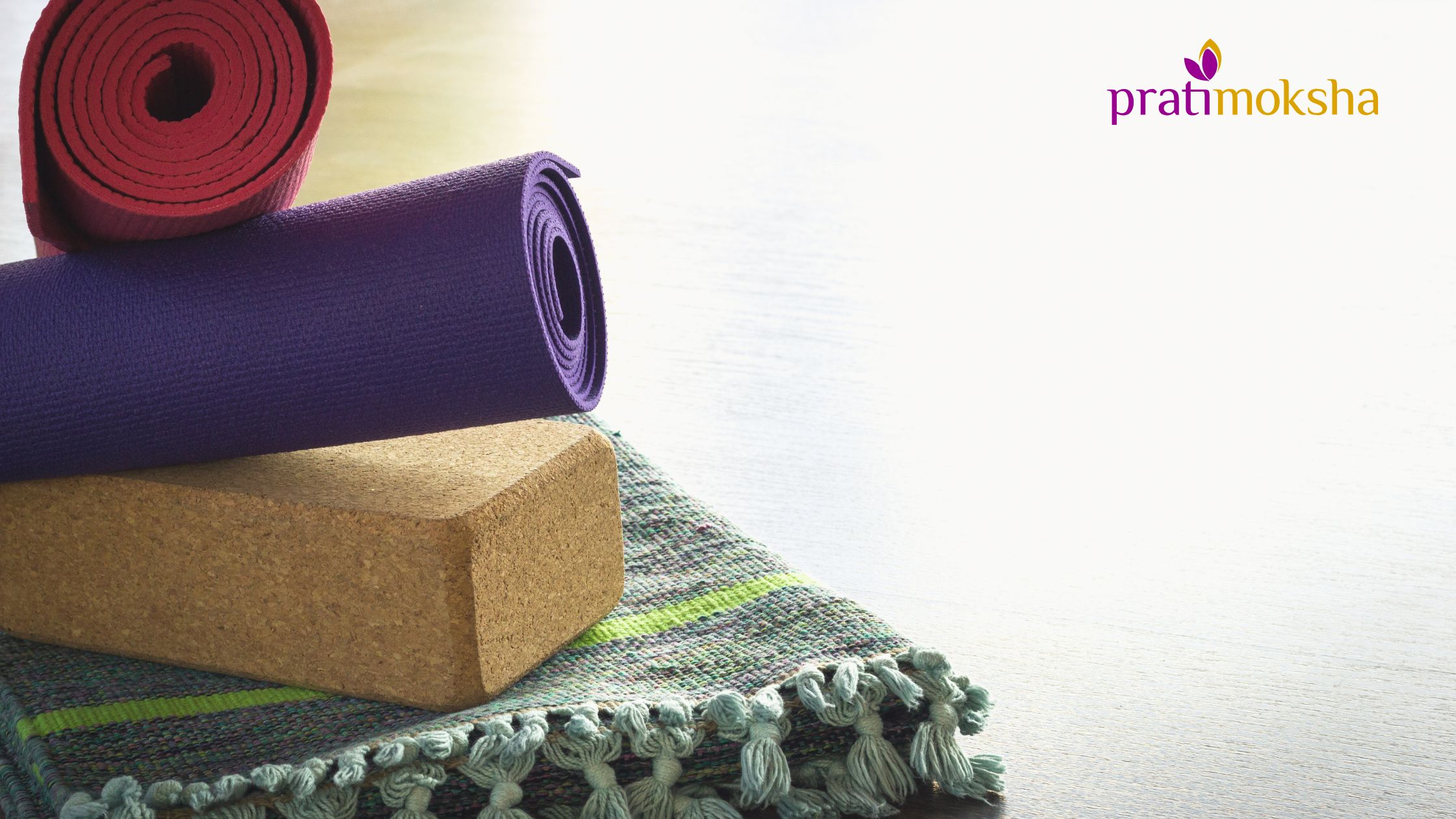
There is a particular kind of pride that walks into a yoga studio and refuses the block. The bolster stays folded in the corner. The strap goes untouched. The assumption, rarely spoken but almost always present, is that using props means you’re not quite good enough to do the pose properly. That assumption is wrong, and it costs people more than they realize.
Props entered mainstream yoga largely through B.K.S. Iyengar, who spent decades developing a systematic use of wooden blocks, blankets, bolsters, straps, and chairs to bring the body into correct alignment regardless of its current limitations. His reasoning was not about accommodation. It was about precision. A 2019 study in the Journal of Bodywork and Movement Therapies found that prop-assisted yoga postures produced significantly better spinal alignment outcomes compared to unassisted versions in participants with limited flexibility — and without the compensatory strain that unassisted attempts typically generate. The props weren’t making the practice easier. They were making it more accurate.
That distinction matters enormously once you understand what yoga postures are actually for.
What a prop actually does
When the body cannot reach a position without gripping, collapsing, or holding its breath, it compensates. A tight hamstring in a forward fold pulls the pelvis into a posterior tilt, which rounds the lower back, which compresses the lumbar vertebrae — the opposite of what the pose is intended to produce. Place a block under the hands and suddenly the spine can lengthen. The breath can move. The nervous system stops reading the situation as a mild emergency.
This is what Lalitha Viswanath has long emphasized in her teaching: the shape is not the point. The internal experience of the shape is the point. Props are tools that help the body arrive at the right internal experience even when its current range of motion would otherwise prevent it.
That is not a workaround. It is the practice.
What props are actually used for — and how
The common ones, and what they genuinely address:
- Blocks bring the floor closer when the hands can’t reach it without collapsing the spine. In standing poses, they restore the length the body loses when it strains.
- Straps extend the arms’ reach in seated poses, allowing the spine to stay upright rather than hunching forward in pursuit of a foot that isn’t coming any closer.
- Bolsters support the body in restorative positions long enough for the nervous system to actually release. Five minutes in a supported chest opener does something that five fast flows cannot.
- Blankets provide height under the hips in seated postures, which tilts the pelvis forward and immediately takes pressure off the lower back.
- Chairs make inversions and deep stretches accessible for people whose bodies aren’t ready for the full version — without removing the benefit of the shape entirely.
None of these are substitutes for the real thing. They are how the real thing becomes available to a real body, right now, at its actual level.
Who avoids props — and why that’s worth examining
Props tend to be embraced by two groups: complete beginners, who have no ego investment yet, and advanced practitioners, who have moved past ego investment entirely. The people most likely to resist them are those in the middle — capable enough to approximate the poses, not yet experienced enough to know what approximating costs.
In Dubai’s studio culture, this middle group is common. Professionals who pick up yoga as a complement to an already active life, reasonably fit, able to get into most shapes without falling over. They don’t need props to stay upright, so they assume they don’t need props at all. What they’re missing is that staying upright and practicing correctly are not the same thing.
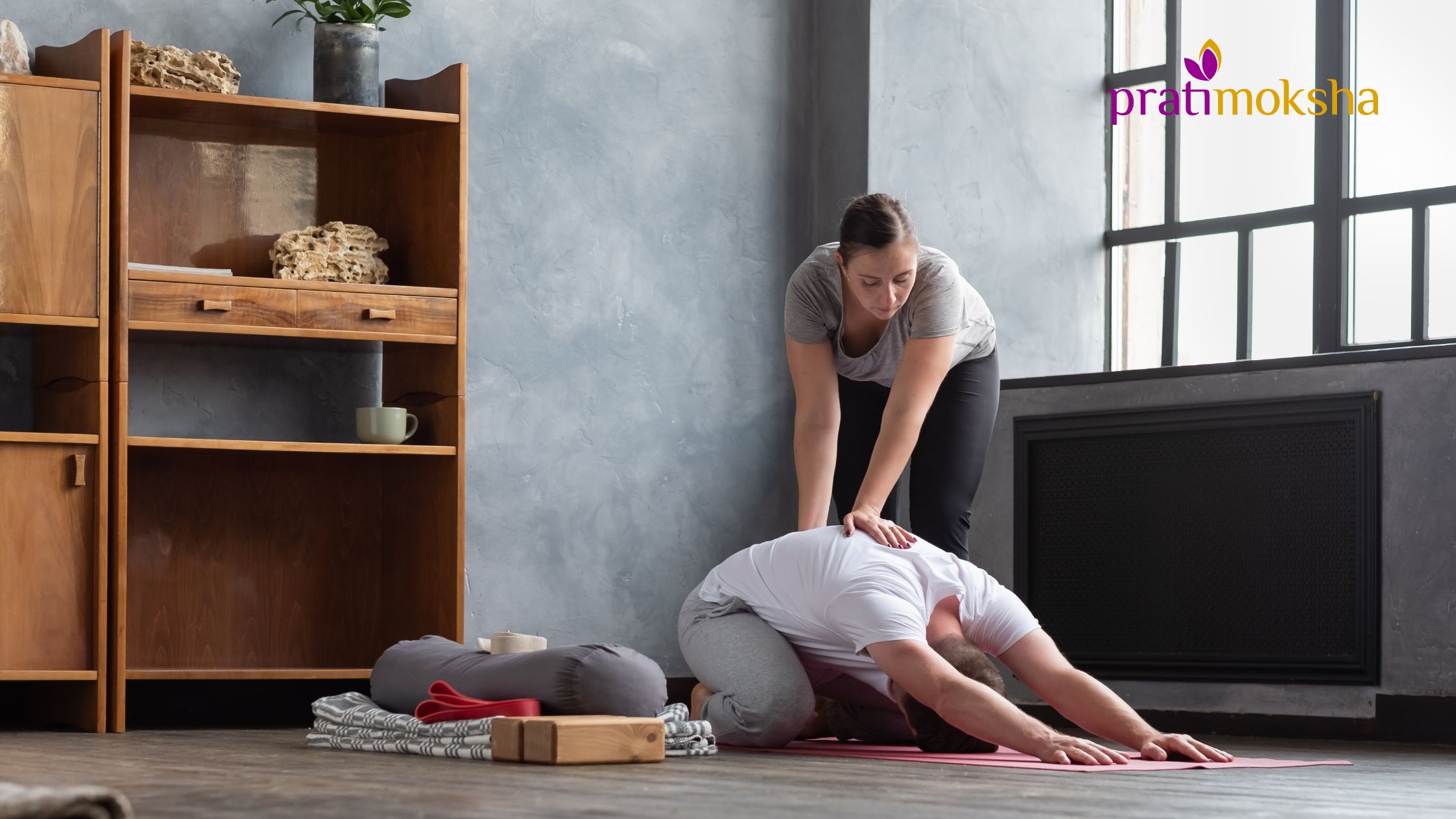
A prop yoga class works with this directly. The use of supports is not optional or remedial — it is the methodology. Every prop placement is intentional. Over time, students who practice with props develop a much clearer internal map of their own alignment. When they eventually practice without them, they know what they’re aiming for because they’ve felt it.
The specific value for people who sit for long hours
Most people practicing yoga in Dubai do so against a backdrop of long working hours, significant screen time, and extended periods of sitting. The postural consequences are predictable: shortened hip flexors, weakened posterior chain, forward head position, restricted thoracic mobility. These are not dramatic injuries. They are the slow accumulation of hours spent in positions the body was not designed to hold indefinitely.
Prop yoga addresses this with a patience that unsupported practice often can’t match. A supported chest opener held for several minutes, with a bolster placed precisely to target the thoracic curve, does something that a faster sequence cannot. The nervous system needs enough time in the correct position to begin releasing. That takes longer than most people expect, and it requires the body to feel genuinely supported rather than effortfully held.
This is also why props appear frequently within yoga therapy programs. For students managing musculoskeletal conditions or chronic tension patterns, props are not an afterthought. They are the primary instrument through which the therapeutic work happens.
The ego problem, plainly stated
Props reveal things. A strap in a seated forward fold shows exactly how much hamstring length is available once the lower back stops compensating. A block in Triangle pose shows where the shoulder is actually rotating. This kind of clarity is useful and, occasionally, uncomfortable.
The discomfort is informational. Most serious practitioners find it far more valuable than the alternative — continuing to practice in ways that look correct from the outside while building the wrong patterns on the inside. The yoga classes at Pratimoksha are taught with this honesty as a baseline.
Yoga practice builds over years, and what it builds on matters. A block placed correctly in the first year is worth considerably more than a decade of unexamined compensation.
If you’d like to experience what prop-assisted practice actually feels like from the inside — not the idea of it, but the physical reality of a pose arriving properly for the first time — a trial session at Pratimoksha is the place to start.


0 Comments