
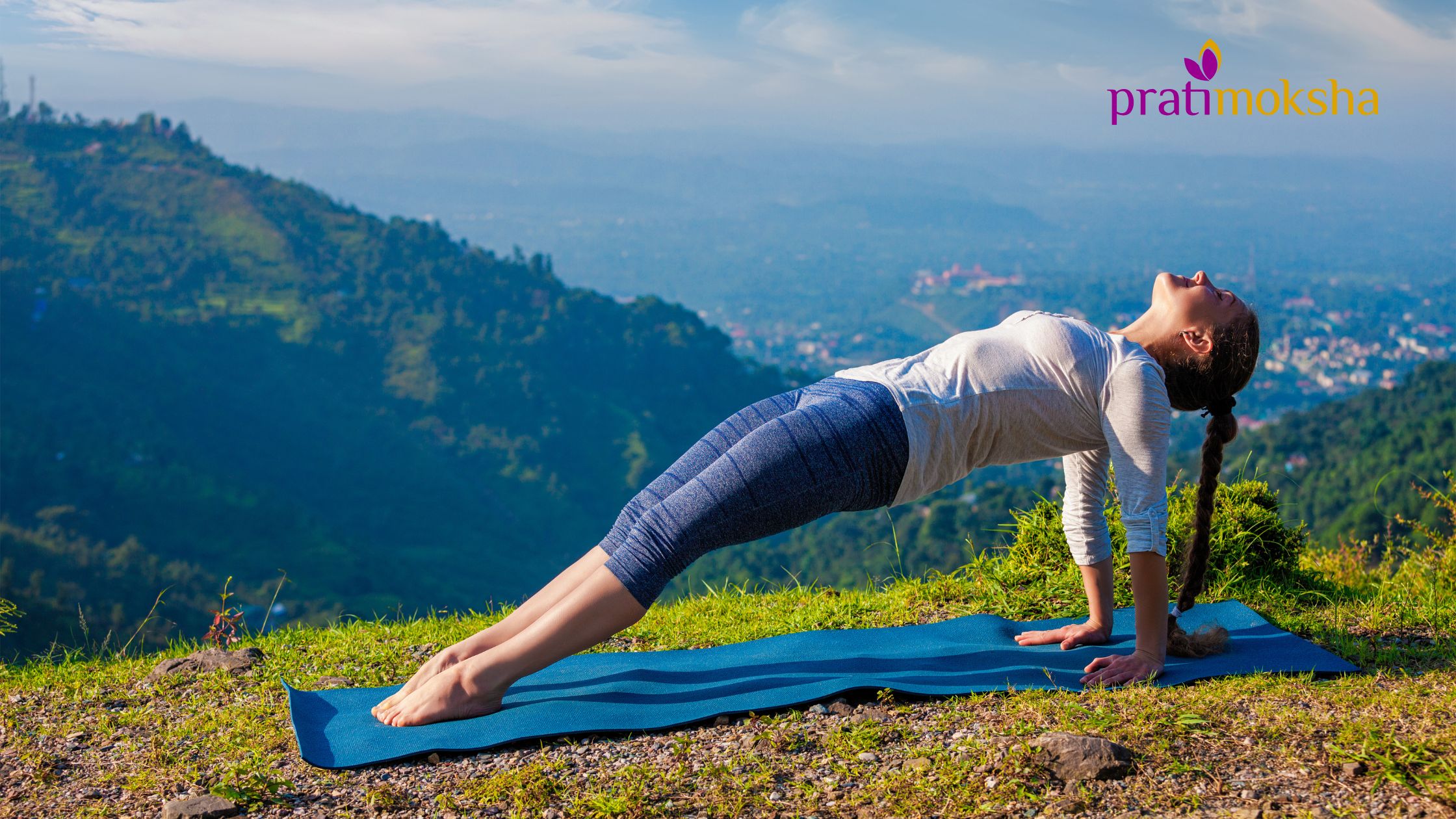
Most people who’ve heard of Hatha yoga picture something slow. Gentle. A beginner’s class with long holds and soft music. A stepping stone before “real” yoga. That reputation is both understandable and almost entirely wrong.
Hatha yoga is not a style sitting below Ashtanga or Vinyasa on some imaginary difficulty scale. It is the parent tradition from which nearly every physical form of yoga in the world descends. The word “Hatha” comes from two Sanskrit syllables — “ha” meaning sun, and “tha” meaning moon — pointing to the union of opposing forces within the body. The practice was codified in texts like the Hatha Yoga Pradipika, written in the 15th century, long before yoga reached fitness studios or app stores. What most modern classes offer under that name is, at best, a fragment of what the original practice contains.
A 2021 review published in the International Journal of Environmental Research and Public Health found that Hatha yoga practice showed meaningful improvements in both physical markers — flexibility, strength, balance — and psychological ones, including reductions in perceived stress and anxiety scores. The sample populations in the review included working-age adults, which is relevant for anyone practicing while managing the weight of a full professional schedule in a city like Dubai, where the pressure to perform rarely lets up.
What Hatha yoga actually involves
The Hatha Yoga Pradipika is not a gentle document. It describes a system of asana (posture), pranayama (breath regulation), shatkarmas (cleansing practices), mudras (energetic gestures), and bandhas (internal locks) designed to purify the body and prepare it for the deeper states of meditation. The physical postures are not the destination. They are preparation.
This matters because the way Hatha is taught at a serious studio is quite different from what gets labeled “Hatha” on a class app. When Lalitha Viswanath describes her approach to Hatha teaching, she consistently returns to this point: the posture is a vehicle. What you’re practicing is not the shape. It’s the steadiness, the breath, the quality of attention inside the shape.
That reframe changes everything. A Warrior II is no longer a leg exercise. It becomes a study in what happens to the mind when the body is under mild physical demand. Can you stay? Can you breathe? Where does attention wander, and can you bring it back? These are not poetic questions. They are the actual content of the practice.
The physical side, honestly
Hatha classes at Pratimoksha are not passive. Poses are held. Breath is regulated. The body works. What’s different from a gym session is the quality of engagement — less about output, more about observation. You’re not racing through a sequence. You’re learning to inhabit each position with enough steadiness that something useful can happen inside it.
For people new to yoga, this is often harder than it sounds. Dubai professionals who are used to measuring effort in reps, kilometers, or hours sometimes find stillness more demanding than movement. That’s not a problem with Hatha. It’s actually the point. The yoga classes at Pratimoksha work with this honestly — Hatha is introduced not as easy yoga but as foundational yoga.
The confusion around “Hatha” as a category
Part of the problem is how the word gets used commercially. On booking platforms, “Hatha” often means “slow-paced class” and functions as a code word for beginners. This flattens the tradition significantly. Vinyasa, Ashtanga, Iyengar, Kundalini — all of these are, technically, Hatha systems. They differ in emphasis, sequencing, and lineage. But they share the same root.
Understanding this doesn’t mean every practitioner needs to study Sanskrit texts. It does mean that approaching Hatha as a serious discipline rather than a warm-up category changes what you get out of it. People who stay with Hatha practice over years — not because they couldn’t graduate to something “harder,” but because they chose depth over variety — often report that the practice keeps opening. The same pose, practiced attentively over months, reveals different things at different times.
That is a different kind of progress from what most fitness formats offer. And it’s the kind that tends to last.
Who Hatha yoga is for
The honest answer is that Hatha yoga, practiced properly, is for everyone and genuinely difficult for most. Beginners benefit from the methodical pace and the clear relationship between breath and movement. Intermediate practitioners find it asks more of them than they expected. Advanced students return to it because the fundamentals never stop being fundamental.
What Hatha yoga does not suit is someone looking for a workout that simply elevates the heart rate and asks nothing else. The practice is attentive. It requires something from you beyond effort. For the right student, that’s exactly what makes it worth doing.
Dubai has no shortage of fitness options. What’s rarer is a practice that slows the demand long enough for something more than conditioning to take place. Hatha yoga at Pratimoksha is taught in that spirit — methodical, honest, and grounded in a tradition that has been refined over several centuries for a reason.
Starting without assumptions
The most useful way to approach Hatha yoga for the first time, or the first time at a serious studio, is to suspend what you already think it is. Come without the assumption that it will be easy. Come without the assumption that you already know the poses. The body you bring to the mat knows things, and the practice will find them.
If you’re curious about what a proper Hatha class looks like — not the app version, not the gym studio version — a trial session at Pratimoksha is the most direct way to find out. No prior experience is assumed. Just a willingness to pay attention.


0 Comments