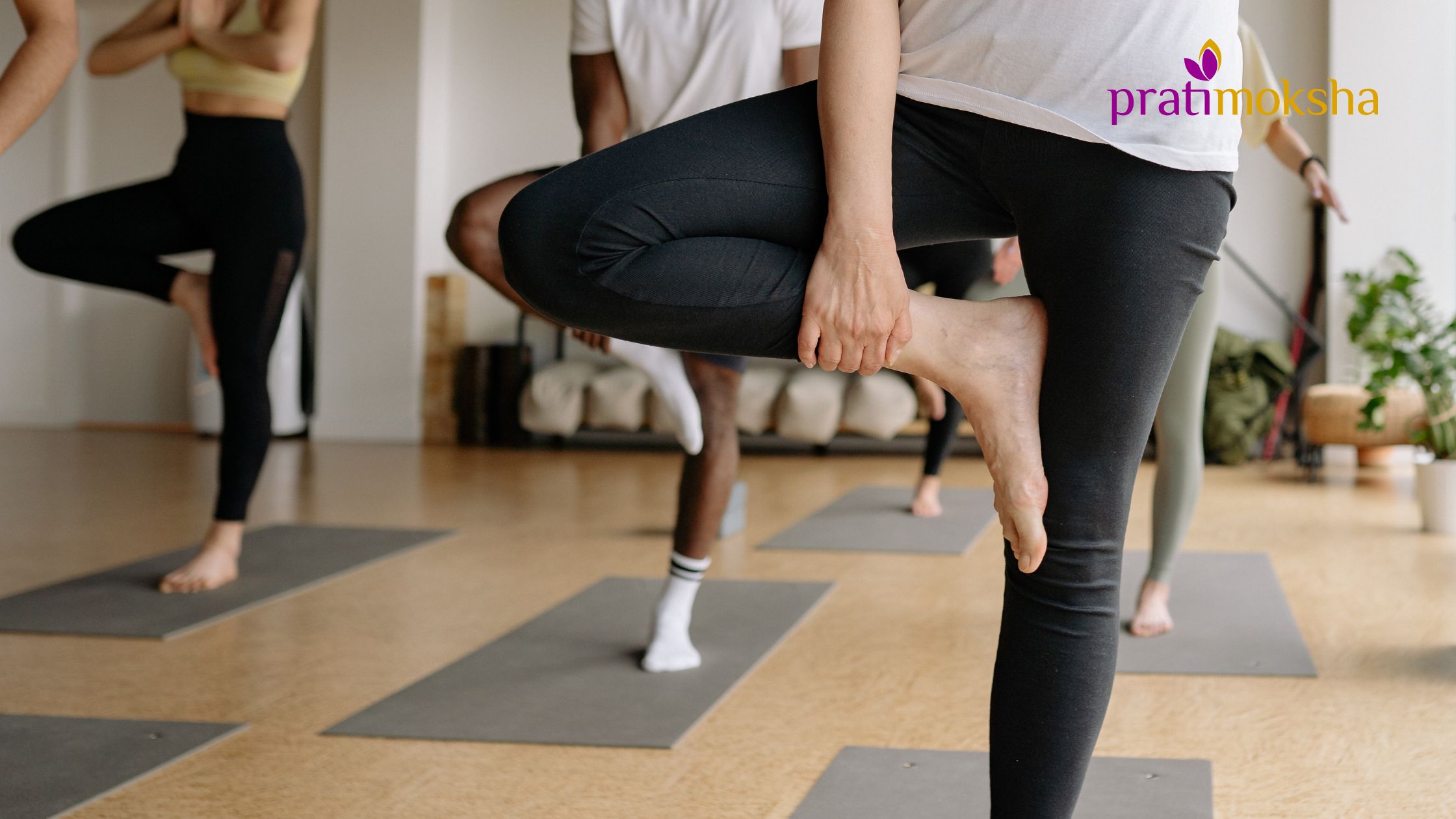
There’s a particular kind of student who shows up to class early, stays a few minutes after, and starts asking questions that go past “am I doing this right.” Not because the class is too easy. Because something in the practice has started to open up, and the current format isn’t big enough to hold it anymore.
Recognizing that moment matters more than it sounds. A 2024 systematic review of health behavior research found that the time it takes for a practice to become genuinely automatic varies enormously between people, ranging anywhere from a few days to nearly a year depending on the behavior and the individual, which means there’s no fixed calendar date when a student is simply “ready.” Separate research published in the Journal of Personality and Social Psychology found that people who began identifying as the kind of person who practices, rather than someone chasing an outcome, sustained their habit at meaningfully higher rates. That shift in identity, more than any specific number of classes attended, tends to be the real signal.
What readiness actually looks like
Readiness rarely announces itself with certainty. More often it shows up as restlessness. The postures that used to feel challenging now feel manageable, and manageable has started to feel slightly unsatisfying. A student notices they’re holding their breath instead of using it. They start wondering what the philosophy behind a pose actually means, rather than just executing the shape. None of this requires a particular number of months or years, though most students who reach this point have built a foundation through consistent yoga classes over a stretch of time long enough for the basics to stop requiring conscious effort.
Lalitha Viswanath describes this moment as the point where a student stops asking “how” and starts asking “why.” That question, more than physical progress, is usually what she looks for before recommending a student move toward deeper study.
Why the signature program exists as a separate track
Pratimoksha’s Signature Program was built specifically for this transition, because trying to deliver depth work inside a general class rarely serves either the beginners or the advanced students well. Beginners need repetition and correction. Advanced students need something closer to internal refinement, which requires a different pace entirely.
The program moves across three connected areas. Asana & Beyond takes physical postures into subtler territory, using them as a doorway into breath and awareness rather than treating the shape of the pose as the goal. Prana & Beyond develops breath control as a discipline in its own right, with a structured progression through observation, ratio work, and retention. Dhyana meditation builds on both, teaching sustained concentration as described in the Yoga Sutras rather than the loosely defined mindfulness most people associate with the word meditation.
Students don’t need to move through all three simultaneously. Some spend a year deepening asana work alone before touching formal breath training. Others arrive already drawn to meditation and use posture practice mainly to support long periods of stillness. The program adjusts to the student rather than the other way around.
Recognizing readiness in a Dubai context
Dubai has a way of rewarding fast progress and visible results, which makes the slower, less measurable nature of deeper practice genuinely counterintuitive for a lot of students. Someone used to quarterly targets at a DIFC firm or rapid iteration in a Business Bay startup often expects the same pace from their yoga practice, and that expectation doesn’t map cleanly onto internal work.
This is worth naming directly, because it changes how readiness should be evaluated. A student who has been practicing consistently for eight months but is still deep in the process of refining basic alignment is not behind. They’re simply not there yet, and that’s a fact about the work, not a failure of discipline. Conversely, a student practicing for years who has quietly built extraordinary internal stillness may look, from the outside, like they haven’t changed much at all. The signature program is designed to notice both kinds of readiness rather than defaulting to time served as the only measure.
What happens if a student moves too early
Starting the signature program before a student has built sufficient foundation tends to create frustration rather than growth. Advanced breath retention techniques taught to someone still learning to observe their natural breath can increase anxiety instead of calming the nervous system. Deep meditation instruction given before a student can comfortably hold physical stillness usually results in restlessness mistaken for failure.
This is part of why the studio’s teachers, rather than students themselves, generally initiate the conversation about moving into signature work. It removes some of the guesswork and prevents the common mistake of self-diagnosing readiness based on enthusiasm alone. Enthusiasm is a fine starting point. It isn’t the same thing as readiness.
The quieter signal worth trusting
Perhaps the most reliable sign that a student is ready isn’t excitement at all. It’s patience. Students who are actually prepared for the signature program tend to be the ones least in a hurry to start it. They’ve stopped needing the practice to prove something and started wanting to understand it more fully, for its own sake.
That shift doesn’t happen on a fixed schedule, and it doesn’t look the same for any two people. For students who suspect they might be approaching that point, the clearest way to find out is a direct conversation rather than guesswork. Pratimoksha’s studio in Oud Metha welcomes that conversation as part of a regular class, or through a trial session for anyone newer to the practice and curious where they currently stand.




0 Comments