
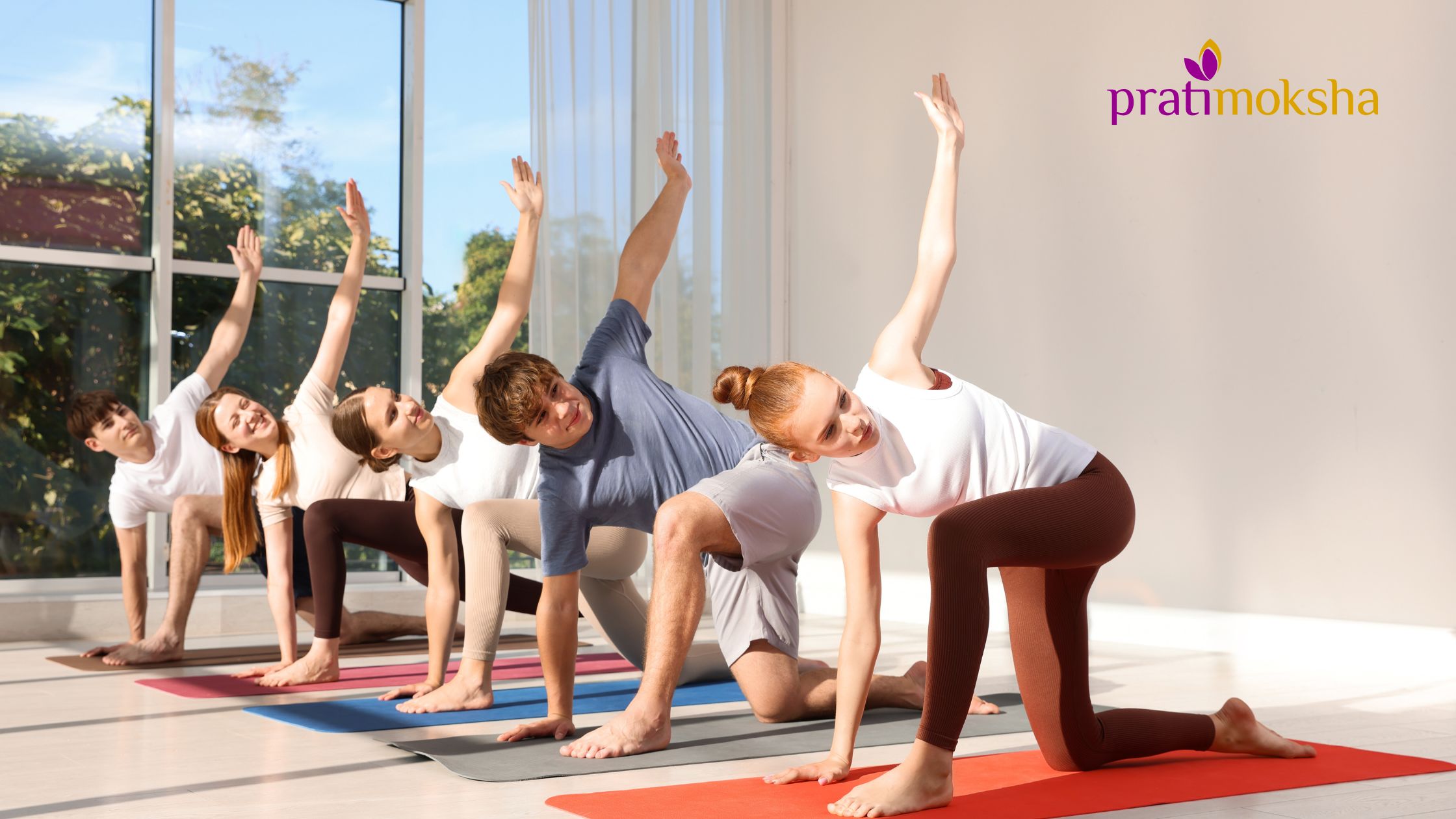
If the phrase “corporate yoga” lands in your head as an image of colleagues in business shirts attempting a sun salutation between two whiteboards — you are not alone. That mental picture has quietly killed more good wellness conversations in boardrooms than any budget constraint ever did.
So let’s clear it up. Because what actually happens in a well-run corporate yoga session looks nothing like that. And once you see it for what it is, the conversation changes entirely.
First, What It Is Not
Corporate yoga is not a fitness class that moved offices. It is not about flexibility, or achieving any particular shape with your body, or keeping up with whoever happens to be the most physically capable person in the room. There is no performance involved. No one is being assessed. No one needs to have done yoga before.
It is also not a team-building activity dressed up in wellness language. The value it delivers is real and measurable — but it works through consistent, regular practice, not through the novelty of a one-time shared experience.
What corporate yoga is, when it is done with genuine intention, is a structured method for helping people recover. Not recover in the way a holiday does — removing you from the source of pressure temporarily — but recover in the way that actually changes how you function under pressure. That is a different thing entirely, and it is worth understanding why.
What Happens in a Session
A corporate yoga session designed for working professionals typically runs between twenty and forty-five minutes. It can happen in a meeting room, a break room, or online — the physical setting is secondary to the content and the quality of instruction.
Within that session, a skilled teacher will guide participants through a combination of breath work, deliberate movement, and stillness. The movements are not complicated. Many can be done seated in a chair. The breath work is not esoteric — it is rooted in the well-documented relationship between breathing patterns and nervous system state. The stillness is not passive; it is directed awareness, which is a different and more useful skill than simply sitting quietly.
The cumulative effect of thirty minutes of this, practised regularly, is that the nervous system begins to recalibrate. People who have spent six hours in back-to-back meetings — which in Dubai’s corporate culture is not an exaggeration — leave a session able to think more clearly, engage more generously, and make better decisions. That is not a wellness claim. That is basic neurophysiology.
Why the Teacher Matters Enormously
This is the part that most organisations underestimate when evaluating corporate yoga programmes. The quality of the instructor determines almost everything.
A session delivered by someone who has learned a sequence and can demonstrate it is a very different experience from one delivered by someone who understands the deeper purpose of each practice, can read a room, adapt in real time, and bring working professionals — many of whom arrive sceptical, distracted, or simply exhausted — genuinely into the practice.
Lalitha Viswanath, who founded Pratimoksha after nearly two decades of classical yoga study and teaching, is precise on this point. The practices matter, she will tell you, but the understanding behind them matters more. A teacher who knows only the form of a practice cannot adjust it meaningfully when the form is not serving the person in front of them.
This philosophy runs through every aspect of how Pratimoksha structures its corporate yoga programmes — sessions are not templated and repeated mechanically. They are informed by what the participants actually need, adjusted as familiarity builds, and always anchored in classical yogic principles rather than whatever happens to be trending in the wellness industry this year.
The Consistency Question
Here is the honest truth about corporate yoga: a single session will feel pleasant. Two or three sessions will feel interesting. But the genuine shift — the one that organisations actually want, the one that shows up in how teams function — happens somewhere around weeks six through eight of consistent practice.
This is not a sales pitch for a long contract. It is a description of how the human nervous system works. Change that is neurological in nature requires repetition. It requires that the body experience the practice often enough that the regulation it produces becomes a learned response rather than an occasional visitor.
The corporate yoga beyond work programme at Pratimoksha is built with this in mind. The structure is designed for consistency, not for impressive one-off demonstrations. Sessions are delivered in a sequence that builds on itself, so that participants are not starting from zero each time but are genuinely progressing — developing a relationship with the practice that begins to extend beyond the session itself.
Who It Is Actually For
One more misconception worth addressing: corporate yoga is not for the people in your organisation who already do yoga. It is for everyone else.
It is for the senior manager who has not moved his shoulders properly in three years. The analyst who goes home with a headache most Thursdays. The team leader who is performing well by every external measure but is running on empty by Wednesday. The professional who relocated to Dubai two years ago, loves the city, loves the work, and cannot understand why she feels so consistently depleted.
These are the people a good corporate yoga programme is designed for. And the good news is that it meets them exactly where they are — no prior experience required, no particular level of physical ability needed, no performance expected.
Just thirty minutes. Done consistently. With a teacher who knows what they are doing.
If you want to see what that actually looks like for your team, book a trial session and find out firsthand.





0 Comments