

There is a particular kind of exhaustion that does not show up on a sick day report. It arrives quietly — in the third coffee of the morning, the inability to concentrate after lunch, the professional who leaves meetings early not because they are disengaged but because they genuinely have nothing left to give. In Dubai’s corporate world, this is not an exception. It is becoming the norm.
The Pressure Is Real — and Measurable
Dubai runs fast. The city’s ambition is part of its identity, and for many professionals — especially the large expat population that has relocated here to build something meaningful — that ambition is shared. Long hours are often worn as a badge of professionalism. Rest is something you catch on a flight home.
A 2023 survey by the UAE’s Ministry of Human Resources found that workplace stress is among the top concerns reported by employees across private sector organisations in the country. Globally, the World Health Organisation estimates that burnout-related productivity losses cost the global economy over one trillion dollars annually. In a city like Dubai, where talent is competitive, retention is expensive, and performance expectations are consistently high, those numbers carry significant weight.
What Burnout Actually Looks Like Inside an Organisation
Burnout is frequently misidentified. It gets confused with laziness, attitude problems, or personal weakness — none of which are accurate. What organisations are often seeing when performance dips is a nervous system under chronic stress, operating in a state of sustained high alert with no adequate recovery.
The signs are visible if you know where to look. Increased absenteeism. Decreased creativity. Conflict between team members who would otherwise work well together. A gradual withdrawal from ownership and initiative. A workforce that shows up physically but checks out in every other meaningful way.
This is not a motivation problem. It is a physiological one — and it requires a physiological response.
Why Traditional Wellness Interventions Fall Short
Many organisations in Dubai have tried to address this. Team lunches, wellness days, motivational talks, access to apps that remind employees to breathe. These are not without value, but they share a common limitation: they sit on the surface of the problem.
Burnout is not resolved by a single intervention. It builds through months, sometimes years, of accumulated stress without sufficient recovery. Addressing it requires something sustained, something that teaches the body and mind how to regulate — not just distract.
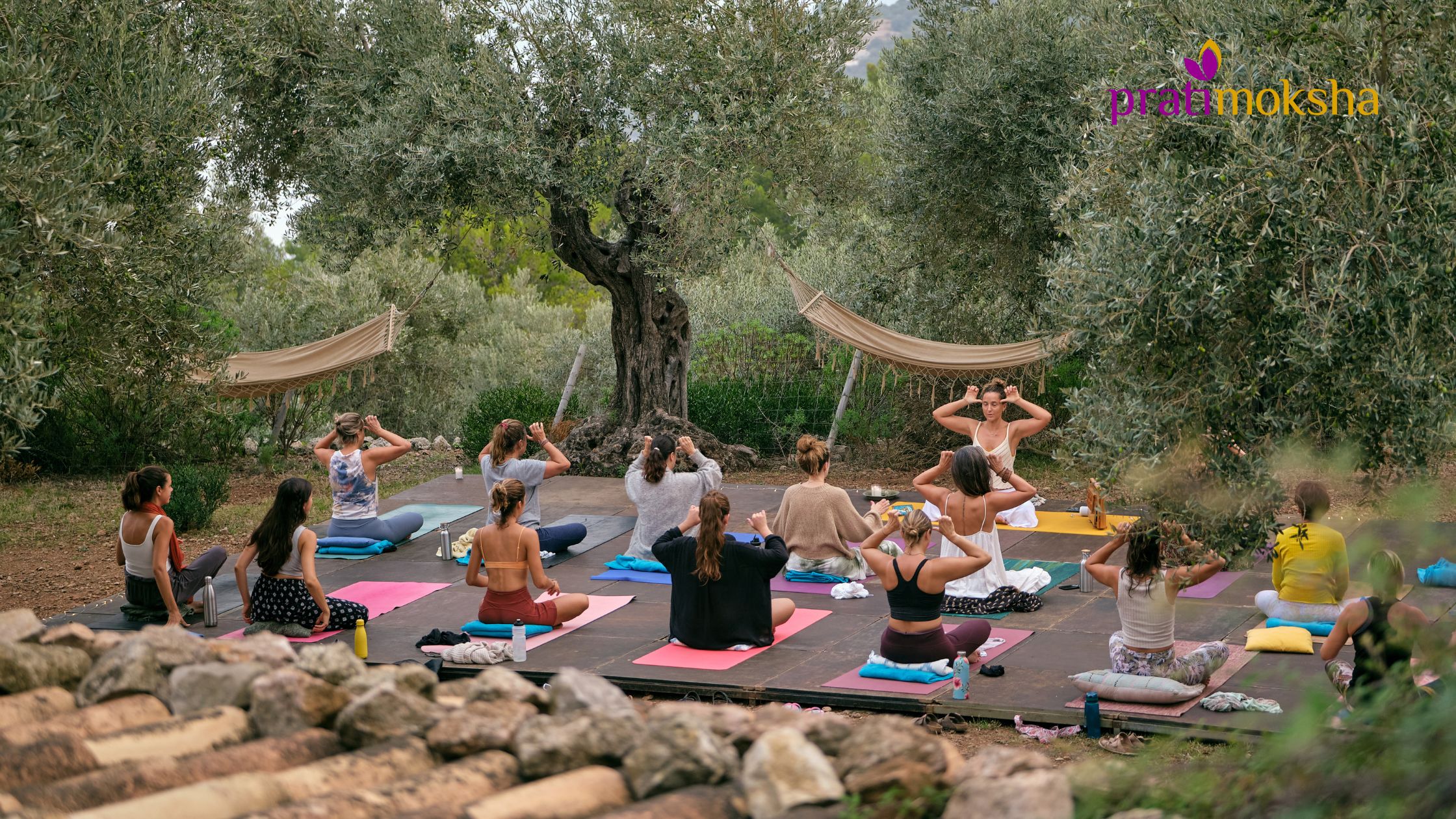
This is precisely where corporate yoga offers something meaningfully different. Not yoga as a performance, not yoga as a company photo opportunity, but yoga as a structured, regular practice of physiological recovery and mental clarity.
What a Meaningful Response Looks Like
For organisations serious about addressing burnout, the first shift is in framing. Burnout is not a personal failure to be managed through HR conversations. It is a systemic condition created by sustained environmental pressure — and it requires a systemic response.
That means building recovery into the working week, not bolting it on at the end of a quarter. It means offering employees something that develops their own capacity to manage stress, not something that simply gives them two hours away from it. And it means committing to consistency, because the nervous system does not recalibrate after a single session.
Lalitha Viswanath, who has spent nearly two decades teaching classical yoga in Dubai, speaks often about the distinction between relief and recovery. Relief is temporary. Recovery is structural. The practices she has built into Pratimoksha’s corporate programmes are designed precisely for that — not to offer employees a moment of calm, but to gradually develop their resilience, focus, and capacity to sustain effort without deterioration.
The Role Organisations Must Play
It would be easy to read this as a call for employees to work on themselves. In fact, the opposite is true. Burnout is an organisational responsibility.
When talented people leave — and they do leave, often without saying burnout was the reason — organisations absorb the cost of recruitment, onboarding, lost institutional knowledge, and the disruption that follows. The business case for intervention is clear. What is less clear, for many companies, is what form that intervention should take.
The corporate yoga programme at Pratimoksha is designed to meet organisations where they are. Sessions can be delivered on-site or online, structured to fit within a working schedule, and tailored to the specific pressures of different teams and industries. The approach is not generic — it is built around the physiological and psychological realities of people who spend eight to ten hours a day under sustained cognitive and emotional demand.
A Different Kind of Investment
Organisations that are genuinely interested in addressing burnout — not managing its optics, but reducing its prevalence — will need to make a different kind of commitment. Not a large one, necessarily, but a consistent one.
A structured yoga programme, delivered regularly and with genuine pedagogical intention, costs considerably less than one round of senior recruitment. It costs considerably less than the productivity losses that accumulate quietly across a disengaged team. And unlike most wellness initiatives, it builds something in participants that stays — an improved relationship with their own nervous system, a set of tools they can use independently, and a more sustainable way of engaging with the demands of professional life in a city like Dubai.
That is not a wellness perk. That is a business advantage.
If your organisation is ready to take a serious, considered approach to employee wellbeing, book a conversation with the Pratimoksha team to explore what a programme could look like for your people.




0 Comments