

Dubai moves quickly.
Meetings begin early, screens remain active late into the night, and even personal time is often scheduled with precision. For many residents, efficiency becomes a way of life. Over time, however, this constant momentum can leave the nervous system overstimulated and the mind rarely at rest.
Many health-conscious individuals in Dubai recognise this strain. They invest in wellness, exercise regularly, and eat thoughtfully. Yet despite these efforts, a persistent sense of restlessness, mental fatigue, or emotional depletion remains.
Grounding, in this context, is not a luxury. It is a necessity.
Yoga offers practical tools to restore steadiness amid urban intensity, not by escaping daily life, but by learning how to remain centred within it.
Understanding Overstimulation in Dubai Life
Dubai’s fast-paced urban environment places unique demands on the body and mind.
Extended screen exposure, high-performance work cultures, artificial cooling, long commutes, and social pressures associated with expatriate life quietly accumulate. The nervous system adapts by staying alert for long periods, often without sufficient recovery.
This state of constant readiness may feel productive initially, but over time it manifests as shallow breathing, muscular tension, digestive irregularities, disturbed sleep, and heightened reactivity.
Grounding yoga tools work by counterbalancing this upward, outward energy with practices that draw awareness inward and downward, stabilising both mind and body.
A Quiet Story from Dubai
A long-term Dubai resident working in a senior managerial role described feeling perpetually “switched on.” Even during holidays, the mind remained busy. Relaxation techniques felt ineffective, and faster yoga classes only added to the sense of internal pressure.
When introduced to grounding practices, the initial experience was subtle. Simple standing postures, longer exhalations, and guided stillness felt almost uneventful. Yet over weeks of consistent practice, the changes became noticeable. Irritability reduced. Focus improved. Even challenging workdays felt more manageable.
Grounding did not remove stress from life. It changed how the body responded to it.
Dubai in Numbers: A Context for Grounding
Studies and regional health data consistently indicate rising levels of work-related stress, anxiety symptoms, and sleep disturbances among urban professionals in the UAE. Long working hours and high digital engagement are key contributing factors.
These patterns highlight the importance of nervous system regulation practices, not only for mental clarity but for long-term physical health.
Yoga, when applied with discernment, offers such regulation.
What Grounding Means in Yogic Terms
Grounding is often misunderstood as simply “relaxing.” In yoga, grounding refers to cultivating stability, presence, and connection with the body’s base and breath.
It is not passive. It is attentive.
Grounding practices emphasise contact with the floor, awareness of weight distribution, slower breathing patterns, and steady observation of sensation. These elements help recalibrate the nervous system and restore a sense of internal support.
Essential Yoga Tools for Grounding
Grounding yoga tools are most effective when practiced consistently and without urgency.
1. Standing Asana with Awareness
Simple standing postures, when approached slowly, foster a sense of stability and strength. Attention is placed on the feet, legs, and alignment rather than depth or range.
2. Extended Exhalation Breathing
Lengthening the exhalation signals safety to the nervous system. This is particularly beneficial in air-conditioned environments that encourage shallow breathing.
3. Slow, Deliberate Transitions
Moving carefully between postures reduces mental scatter and encourages presence. Each transition becomes an opportunity to stabilise rather than rush.
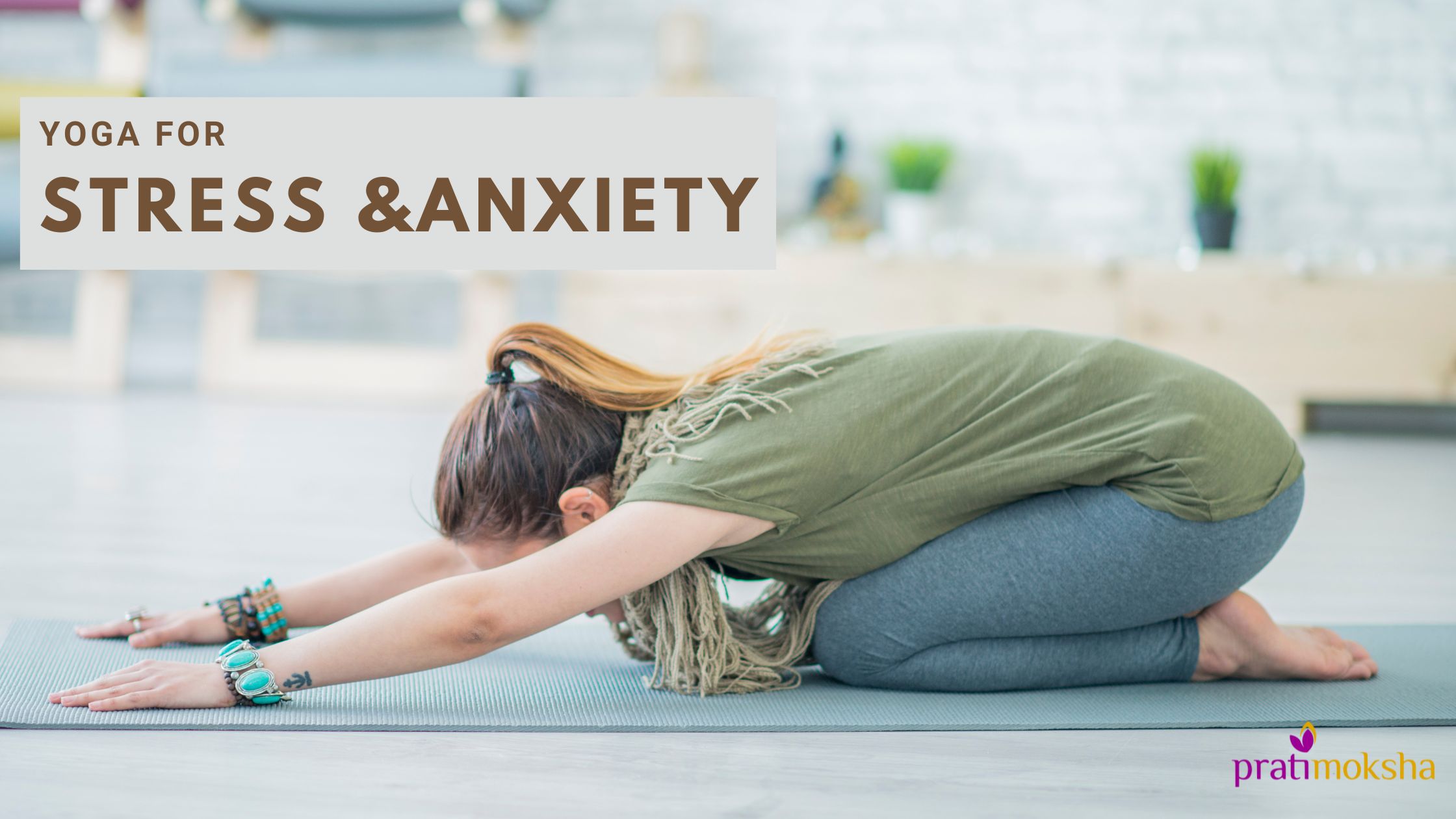
4. Supported Forward Folds
When practiced gently, forward folds draw energy inward, calming mental activity and soothing overstimulation.
5. Integrated Stillness
Pauses between movements allow the body to absorb the effects of practice. Stillness is treated as a core component, not an optional end.
These principles form the foundation of therapeutic work within Pratimoksha’s yoga therapy programmes, where practices are adapted to individual nervous system patterns rather than standardised routines.
A Corrective Insight on Modern Coping Strategies
A common misconception in modern urban wellness culture is that grounding requires withdrawing from responsibilities or dramatically changing one’s lifestyle.
In reality, grounding is about how one meets life, not how much one avoids.
Yoga tools work when they are integrated into daily rhythms, not reserved for rare moments of calm. Short, regular practices are often more effective than occasional intensive sessions.
This reframes yoga as a support for daily functioning, not an escape from it.
The Pratimoksha Approach to Grounding
At Pratimoksha, grounding practices are taught with patience and precision. The emphasis is on sensing rather than achieving.
Under the guidance of founder and lead yoga therapist Lalitha Viswanath, students learn to recognise signs of overstimulation and respond with appropriate practices. The approach is rooted in traditional yogic understanding, adapted thoughtfully to Dubai’s contemporary realities.
Those attending mindful yoga classes often notice that practices feel deceptively simple yet deeply regulating. Progress is measured internally, through steadiness and clarity, rather than outward performance.
Responsibility and Consistency
Grounding does not happen overnight.
The nervous system learns through repetition and safety. Consistent, attentive practice is essential. Yoga supports this process, but it requires personal responsibility and willingness to slow down.
For individuals seeking a gentle entry point, beginning with a trial session allows space to experience grounding practices without expectation or pressure.
A Steady Way Forward
Dubai’s pace is unlikely to slow. But how one inhabits that pace can change.
Yoga tools for grounding offer a way to remain present, resilient, and clear amid constant movement. Not by doing more, but by learning how to stay connected to the body and breath.
For health-conscious residents who value depth, quality, and long-term wellbeing, grounding practices provide a stable foundation. Quietly effective. Sustainably supportive.


0 Comments