
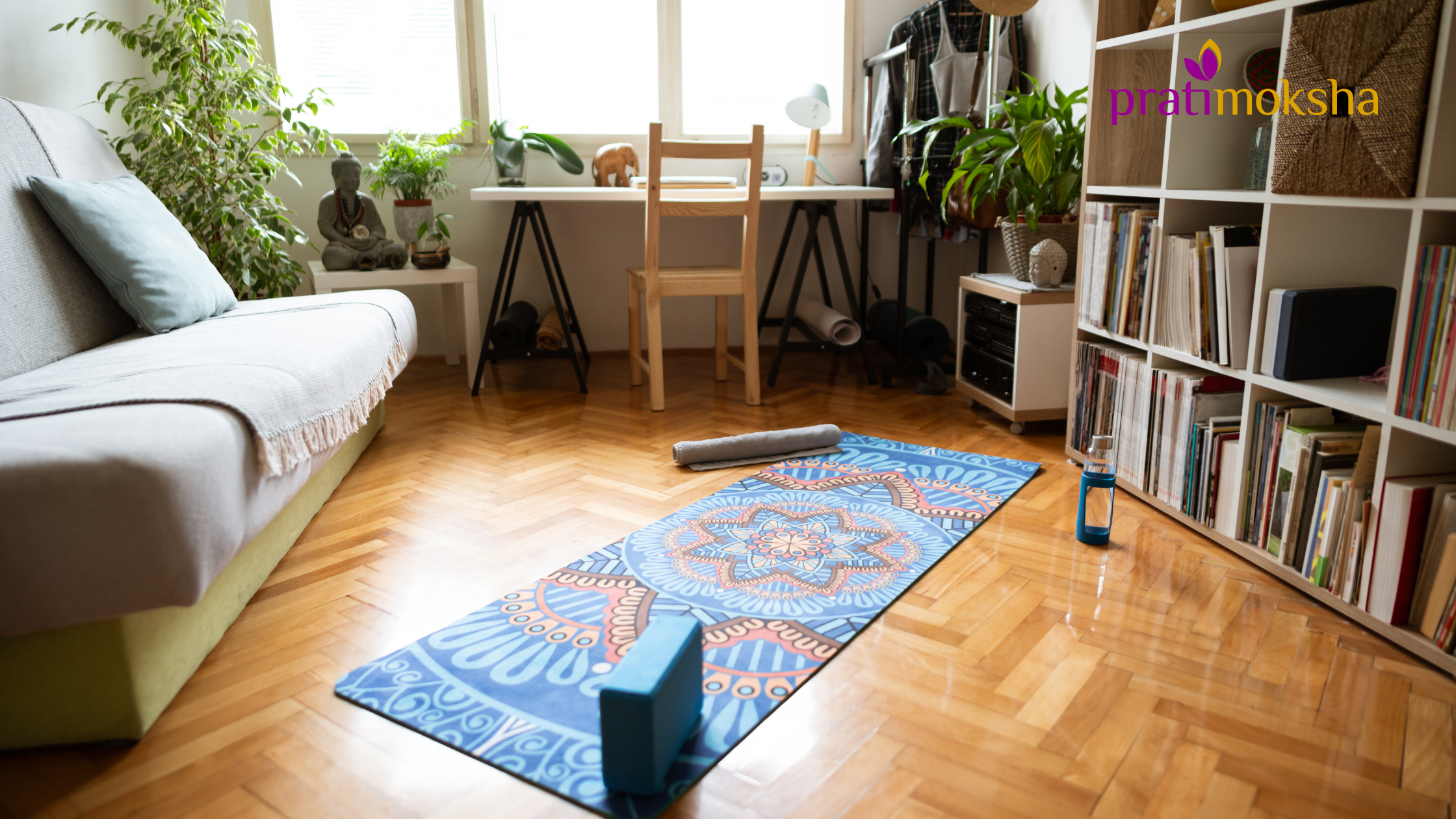
Most people picture a home session as a smaller version of a studio class, dragged into a living room. It is not that. The shape of the hour changes when the teacher is working with one body instead of fifteen.
A systematic review published in the Journal of Science and Medicine in Sport, led by researcher Holger Cramer, found that a large share of yoga-related injuries trace back to poor sequencing and inadequate warm-up rather than the poses themselves. That finding matters more in a private setting, not less, because there is no room in a one-on-one session to hide behind a group’s average pace. Every phase of the practice has to be built around the specific person on the mat.
This is what actually happens when Pratimoksha’s at-home and in-office private yoga teachers arrive at a home in Dubai, from the first minute to the last.
Arrival and a few minutes of nothing
A private session does not begin with a pose. It begins with the teacher noticing the space: how much floor is available, what furniture needs to move, whether the air conditioning is blasting cold air directly onto the mat. Then a short conversation. How did the week go. Is anything sore. Did the last session leave any lingering stiffness. This is not small talk. It is the information that shapes the next hour.
Centering before movement
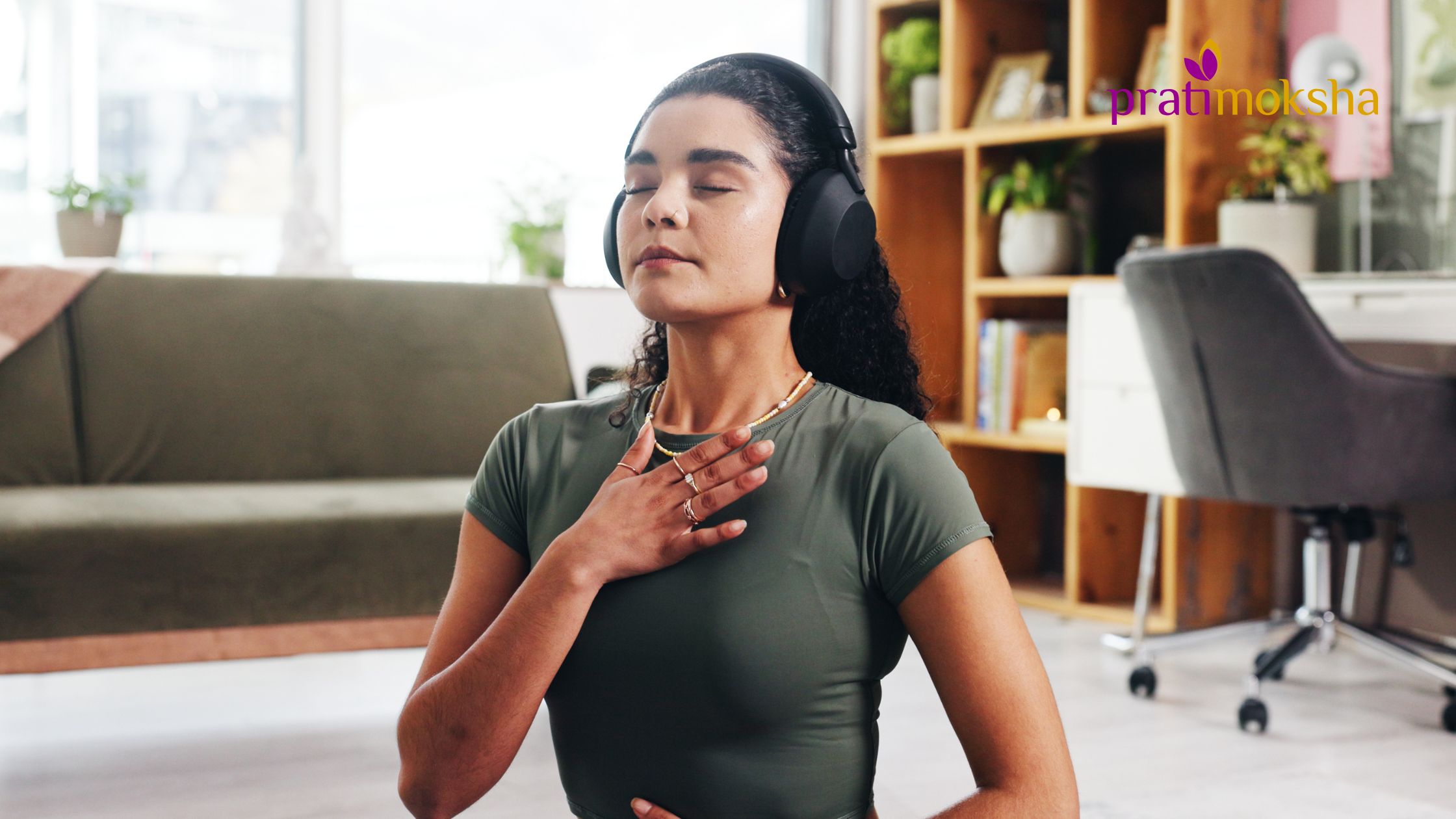
Most home sessions open with a few minutes of seated breath work, not because it looks good on a schedule but because it gives the teacher a read on the nervous system before asking the body to do anything. Someone who arrives wound tight from back-to-back calls in Business Bay needs a different entry point than someone who has been sitting still all day working from home in Al Barsha. A private teacher can actually see this and adjust, in a way a group class instructor simply cannot.
The warm-up phase
Warm-up in a private session tends to be slower and more specific than in a studio class. Instead of a generic sun salutation sequence, the teacher builds movement around whatever the body flagged in that opening conversation. Tight hips get more attention than shoulders that day. A stiff lower back changes the entire first fifteen minutes. This is the phase where most of a session’s real customization happens, even though it rarely looks dramatic from the outside.
Main practice: the part that actually varies
Here the shape of the session depends entirely on what it is for. A few examples of how this phase differs by goal:
- For stress and tension, the focus stays on longer holds, slower transitions, and pranayama woven between postures rather than saved for the end
- For mobility or joint concerns, the pace slows further and props take on a bigger role, since there is no group average pulling the sequence forward
- For someone building strength or preparing for a deeper practice, the session pushes further into asana work with close attention to alignment, since a private teacher can correct in real time rather than call out a general cue to the room
None of these variations require different equipment. A cleared floor space in a Downtown Dubai apartment or a quieter room in a Jumeirah villa is enough for any of them.
Peak work, if the day calls for it
Not every session builds to a demanding pose, and that is intentional. A studio class often needs a peak posture to give the hour a shape. A private session does not carry that pressure. Some days the most useful thing a teacher can offer is restraint, holding back from a challenging pose because the body clearly is not ready for it that week. This is one of the quieter advantages of one-on-one instruction: nobody is comparing themselves to the person on the next mat, so there is no reason to push past what the day actually allows.
Cooling down and the part people underestimate
Closing stillness gets more time in a home session than in most studio classes, largely because there is no next class waiting to start in the room. A few extra minutes of quiet, guided or otherwise, often does more for someone managing chronic stress than the preceding forty minutes of movement. Pratimoksha’s teaching approach, shaped by founder Lalitha Viswanath’s classical training, treats this closing period as part of the discipline rather than an afterthought tacked onto the end.
What happens after the mat gets rolled up
A brief conversation usually follows. What felt difficult. What felt easy. Anything to watch for before the next visit. This short debrief is where a private practice starts to compound over weeks, because the next session is informed by this one rather than starting from a blank template.
How this differs from the individual program at the studio
Pratimoksha’s individual program already offers one-on-one instruction inside the studio for students who want more focused attention than a group class provides. The home and office format extends that same philosophy into a different setting. The content of the session does not change because the address does. What changes is the removal of a commute, which for many people across Dubai is the actual barrier standing between them and a consistent practice.
A session structured this loosely might sound less rigorous than a studio class with a clear arc from warm-up to peak pose to savasana. It is not. It is simply built around one body’s actual needs instead of an average drawn from a room full of them. For someone deciding whether this format fits their week, the clearest way to find out is to experience one directly, which can be arranged through Pratimoksha’s booking page.



0 Comments