
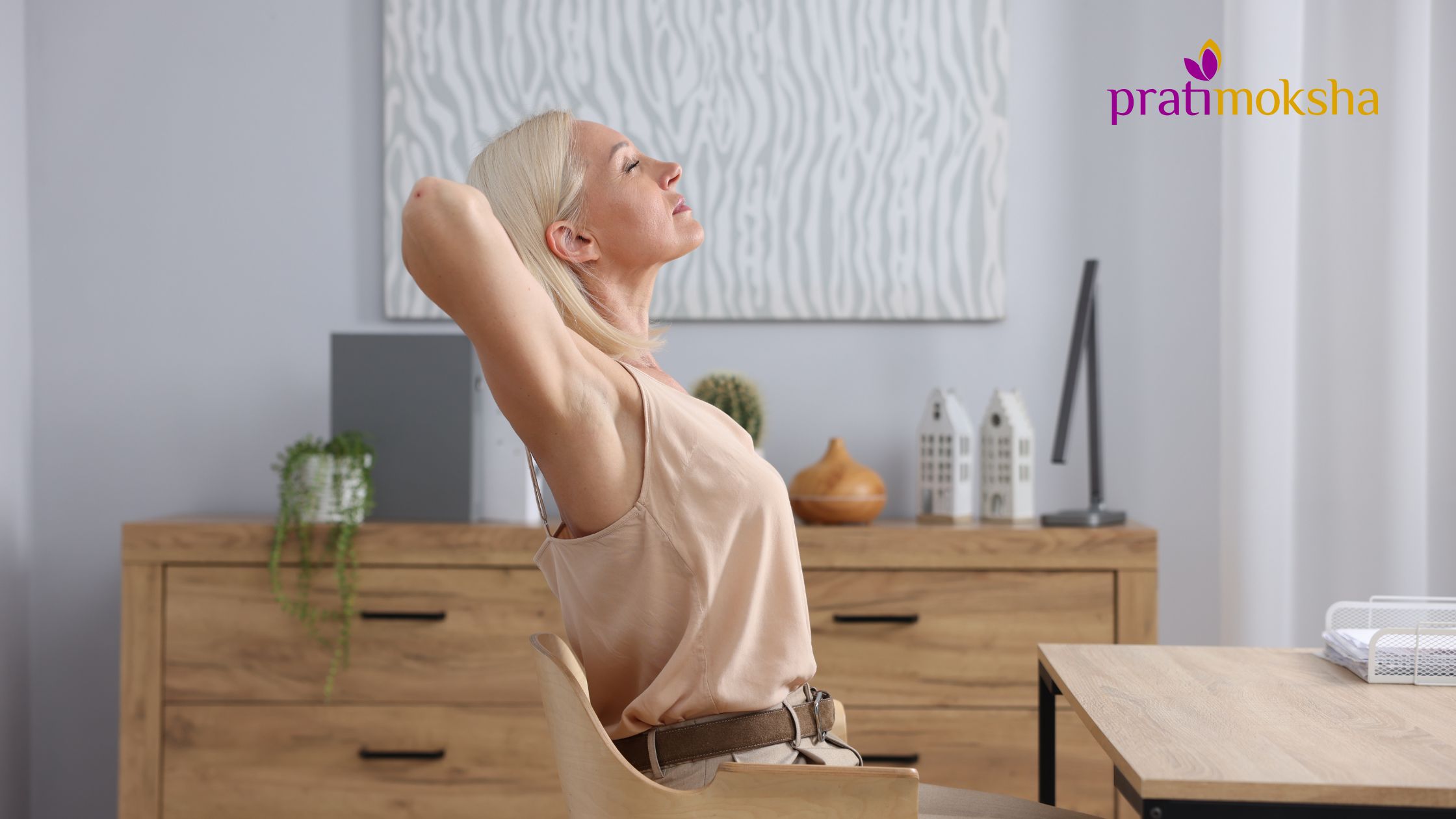
Most people, when they think about improving productivity at work, think about systems. Better project management tools, cleaner inboxes, more focused meeting agendas. What they almost never think about is the body sitting in the chair holding all of it together.
That oversight is costing organisations more than they realise.
The average office professional in Dubai spends somewhere between eight and ten hours a day seated. Factor in the commute, the evening wind-down on the couch, and the screen time that bleeds into most people’s nights, and the body is spending the vast majority of its waking hours in a posture it was never designed to sustain. The consequences of this are not abstract. They show up as back pain, shoulder tension, persistent fatigue, and a quality of attention that gradually narrows over the course of a working day until, by mid-afternoon, the capacity for clear thinking has quietly packed up and left.
A Problem Hidden in Plain Sight
There is a particular kind of tiredness that accumulates in an office environment that has nothing to do with the volume of work being done. It is the tiredness of sustained physical stillness. Muscles held in one position for hours build tension not through use but through the absence of movement. Circulation slows. The breath becomes shallower without anyone noticing. And the nervous system, which is designed to cycle between activity and rest, gets stuck in a low-grade holding pattern that feels like fatigue but is actually something closer to stagnation.
In Dubai specifically, where office culture tends to reward long hours and where the heat for much of the year makes outdoor movement during the day genuinely impractical, this problem compounds. People arrive at work, sit, and largely remain seated until they leave. The body absorbs this. And eventually, it responds.
What Chair Yoga Actually Involves
Chair yoga is not a compromise version of real yoga. It is a targeted, intelligent application of yogic principles to the reality of a working body in a working environment. The chair is not a limitation. It is simply the context.
A well-structured chair yoga session for an office team will work through the areas where tension accumulates most predictably in sedentary professionals. The neck and upper shoulders, which bear the chronic weight of forward head posture at a screen. The lower back, which loses its natural curve after hours of unsupported sitting. The hip flexors, which shorten progressively with prolonged sitting and pull the pelvis out of alignment in ways that cause pain far from the original source. The chest and ribcage, which compress with rounded posture and restrict the depth of the breath.
The movements involved are not dramatic. They do not require changing clothes, clearing furniture, or any particular level of physical ability. They can be done at a desk, in a meeting room, or in any space where a group of people can sit comfortably. What they require is a teacher who understands the anatomy well enough to make them genuinely effective rather than simply symbolic.
The Breath Connection
One element of chair yoga that tends to surprise people is how much of the session is devoted to breathing. Not breathing as a relaxation exercise, but breathing as a direct tool for shifting physiological state.
When the body is under sustained cognitive or emotional load, the breath shortens and rises into the upper chest. This pattern, maintained over hours, keeps the nervous system in a mild but persistent state of alert. It is not dramatic enough to feel like stress, but it is enough to erode the quality of attention, increase irritability, and reduce the capacity for the kind of considered, creative thinking that most professional roles actually require.
Teaching people to breathe more fully, more deliberately, and more consciously is not a small thing. It is one of the most direct interventions available for restoring mental clarity and emotional steadiness in the middle of a working day. The yoga therapy principles that inform Pratimoksha’s approach treat breath as a primary tool precisely because its effects are immediate and accessible to anyone, regardless of physical condition or prior experience.
What Changes With Regular Practice
After one session of chair yoga, most people report feeling less physically tense and somewhat more alert. These are real effects, and they are worth something. But they are not the reason to commit to a regular programme.
The reason to commit is what happens after six or eight weeks of consistent practice. Posture begins to improve, not because people are consciously trying to sit up straight, but because the muscles supporting the spine have been regularly engaged and the awareness of habitual collapse patterns has been developed. The afternoon energy dip that most office workers treat as inevitable becomes less pronounced. People begin to notice when tension is building and have tools to address it before it accumulates into a headache or a mood.
This is the difference between a session that feels good and a practice that changes behaviour. Lalitha Viswanath has always drawn a clear line between the two in her teaching. Feeling good after a session is pleasant. Gradually developing the awareness and capacity to manage your own physical and mental state with more skill is something that serves you for the rest of your professional life.
Practical for Dubai’s Corporate Reality
One of the genuine strengths of chair yoga as a corporate wellness offering is how little it asks of an organisation operationally. No dedicated wellness space is required. No equipment needs to be sourced. Participants do not need to arrive in different clothes or factor in time to change and freshen up before their next meeting.
A session can slot into a lunch break, a late morning, or the first thirty minutes of an afternoon. For Dubai offices where space is often at a premium and schedules leave little room for anything that feels logistically complex, this matters. The barrier to participation is genuinely low, which means the consistency that makes the programme valuable is far easier to sustain.
Pratimoksha’s corporate yoga programme includes chair-based sessions specifically designed for office environments, delivered either on-site or online for teams that are hybrid or fully remote. The content is adapted to the profile of the team and builds progressively across sessions so that the practice deepens rather than repeating the same experience each time.
If your team spends most of its day at a desk, this is probably the most practical and immediately impactful place to start. Book a trial session and see what thirty minutes can actually do.




0 Comments