
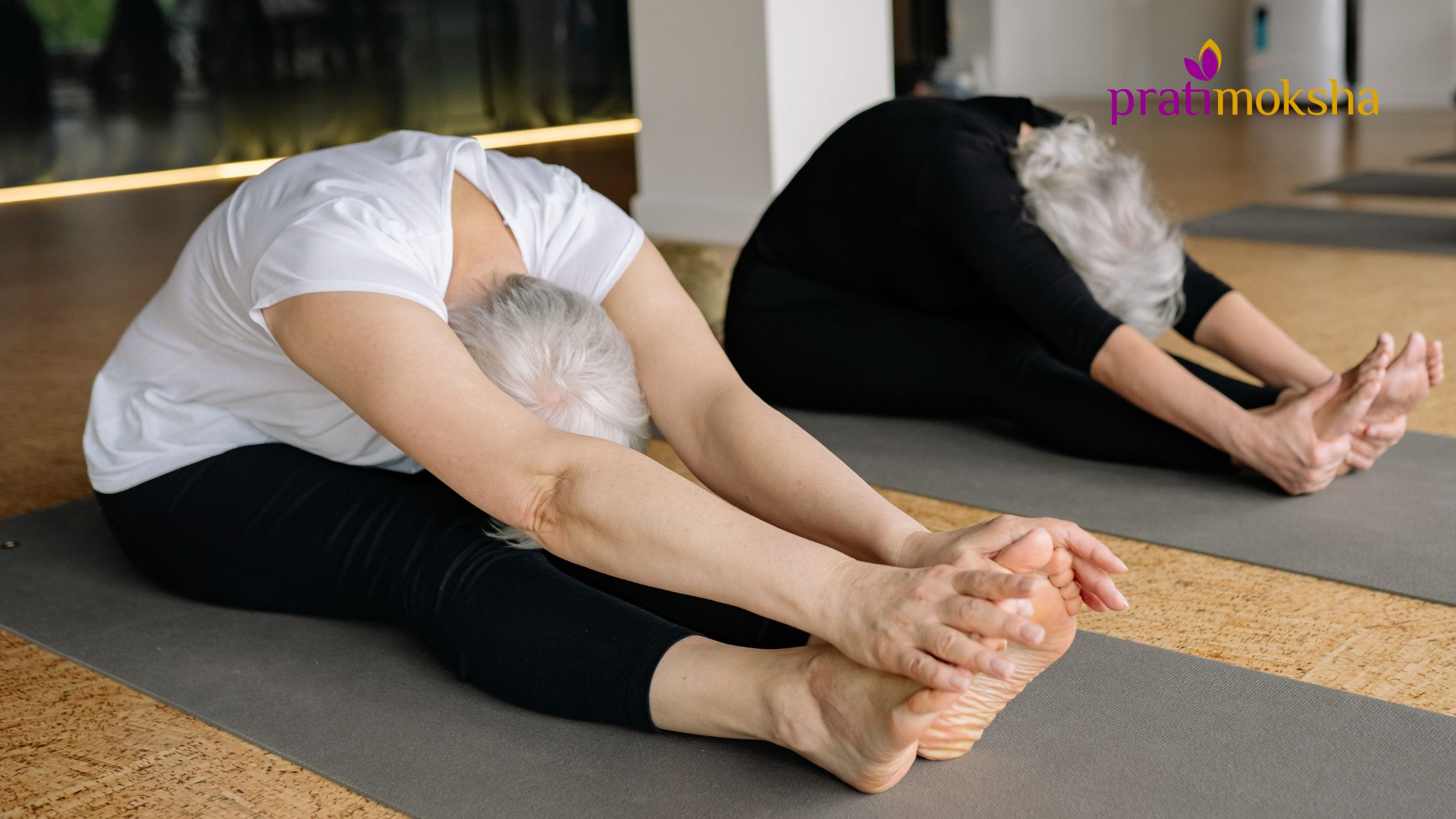
Most yoga memberships in Dubai are sold in packages of ten or twenty classes. Almost nobody buys one thinking about year two.
That’s not a criticism. It’s just how most people start anything, testing it, seeing if it fits, keeping the commitment small until it proves itself. Fair enough.
But something happens to a regular practitioner’s brain around the one-year mark. Not metaphorically. Measurably.
A 2025 scoping review in BMC Complementary Medicine and Therapies studied practitioners with more than a year of consistent practice, separating them from the short-term studies that dominate most yoga research. One finding stood out. Long-term Ashtanga practitioners, scanned during postural practice, showed a measurable increase in cerebellar glucose metabolism. Controls doing ordinary exercise showed none.
That’s a real, physical shift. Not a feeling. A change in how the brain actually works.
Most people never find out what a year does. They stop well before that, right around the point the practice stops feeling new.
What the first few months actually build
Early practice is mostly physical. Flexibility improves. Strength shows up in places that were ignored for years, often the shoulders and the lower back for people who spend their weekdays hunched over a laptop in a DIFC office.
Balance gets less wobbly. These changes matter, and they’re usually what keeps a new student coming back for class eleven, then twelve.
But they’re also the easy part. And they plateau fast, once the body adjusts to the new demand being placed on it.
What changes after that
Past six months, something quieter starts happening. Attention gets steadier, not just on the mat.
A student notices they’re less rattled in a tense meeting. Less thrown off by a flight delay out of DXB. Less inclined to spiral over something that didn’t go as planned.
Lalitha Viswanath, who has watched this exact shift in students for close to two decades, says this is where most people either deepen their commitment or quietly drift off. The obvious physical wins have leveled out. What’s left is quieter, slower work, and not everyone wants to keep going once the visible rewards stop showing up.
The ones who do keep going are usually the ones who’ve already noticed something worth chasing further.
Why a year is the real threshold
A year isn’t a random marker. It’s roughly when a practice stops being something maintained by willpower and starts becoming closer to identity, something behavior researchers have documented well beyond yoga specifically.
At Pratimoksha, this is often when a student’s relationship to class changes noticeably. A general group format starts to feel slightly too broad. Questions shift from “am I doing this right” to something closer to why the practice works the way it does.
This is frequently the point where teachers start recommending a move into the signature program, deepening through Asana & Beyond, structured breath work, and eventually meditation.
What a year looks like in a city built for distraction
Staying with anything for twelve consistent months is a genuine achievement anywhere. In Dubai, it’s a slightly harder one.
Long hours in Business Bay towers eat into evenings. Weekend trips pull people out of their routine every few weeks. A packed social calendar along Sheikh Zayed Road rarely slows down for anyone.
Making it to a year here, without the schedule breaking the habit first, says something the postures alone don’t capture.
What changes for students who keep going
Past a year, the changes compound in ways that are hard to summarize neatly. Reactivity keeps softening. The gap between a stressful trigger and the reaction to it keeps widening, slowly, without one dramatic turning point.
Some students move into the individual program, built entirely around their own stage of practice rather than a shared class schedule. Others stay in the regular structure indefinitely, having realized that consistency itself, sustained for years, was what they were actually looking for.
There’s no single right path here. What the research and the studio’s own experience agree on is simpler. The deeper changes take longer than almost anyone expects at the start, and they rarely show up on the timeline a new student is hoping for.
What six weeks can’t tell you
A six-week package can tell a student whether they enjoy the physical practice. It can’t tell them what a year of it does, because most of what a year builds is invisible in the early stretch, by definition.
That’s a hard thing to sell honestly, and Pratimoksha doesn’t oversell it. What the studio can offer is a starting point, and teachers who’ve watched this exact progression play out for years at the studio in Oud Metha.
Anyone standing at the start of that year, or wondering whether to begin it, is welcome to find out directly. A trial session won’t show the full picture. It’s just where the picture starts.




0 Comments