
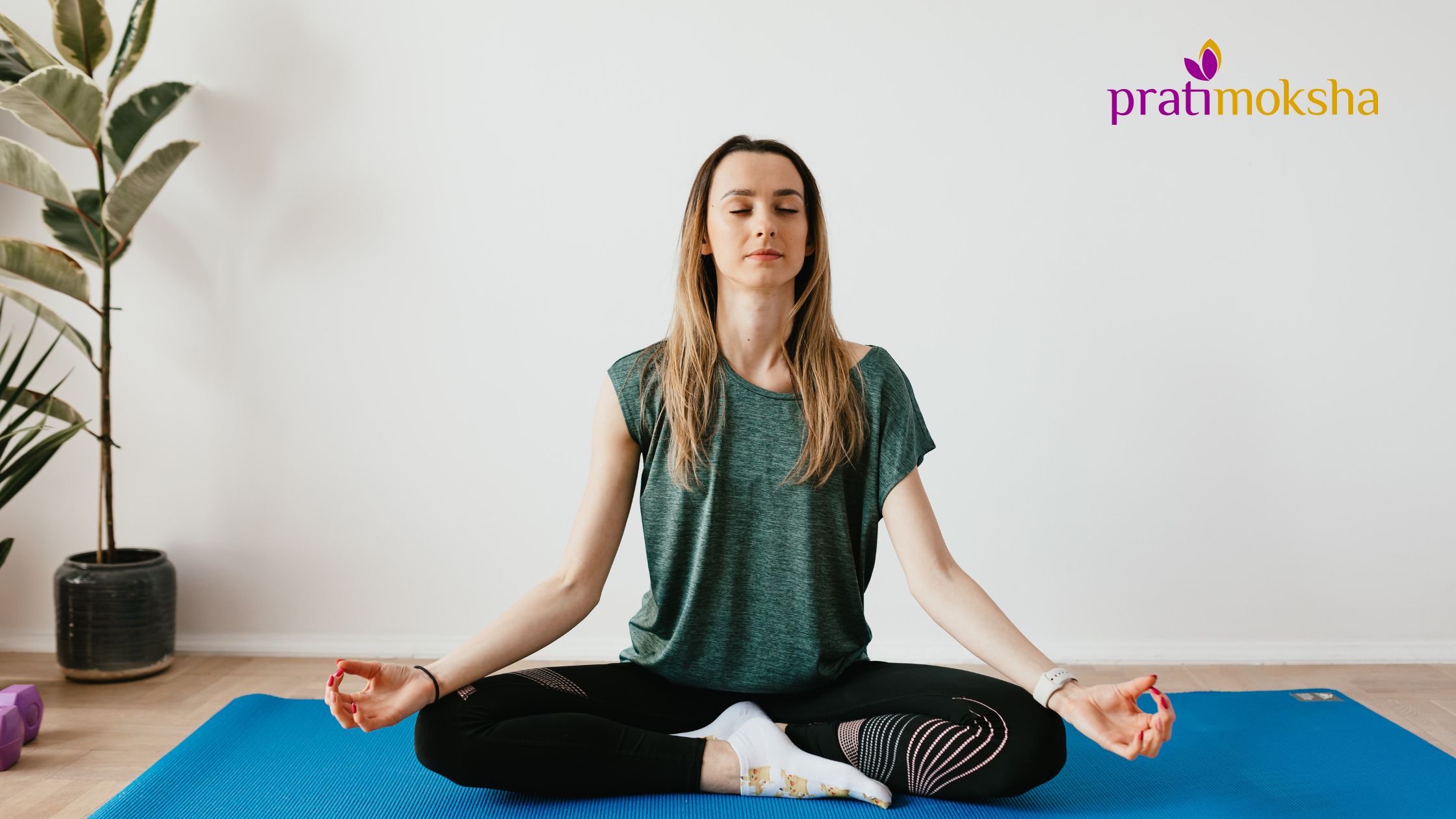
Dhyana is not the same thing as sitting quietly with your eyes closed. That confusion is common, understandable, and worth clearing up before anyone attempts the practice seriously.
A widely cited Harvard study found that people’s minds wander for roughly 47 percent of their waking hours, and that this wandering tends to make them less happy regardless of what they’re actually doing. Patanjali’s Yoga Sutras, written more than two thousand years ago, describe something close to the opposite state. A recent selective review of the dharana-dhyana model in healthy participants noted that classical texts treat meditation not as heightened awareness of the present moment, but as an uninterrupted connection between the mind and a single chosen object, a state distinct from ordinary attention altogether. That distinction is the entire point of dhyana, and it’s usually the part left out of casual descriptions of meditation.
Dharana comes first, and most people skip it
The Yoga Sutras describe two connected stages before meditation proper. The first is dharana, concentration with effort, where the mind is deliberately narrowed onto a single point: the breath, a sound, a fixed internal image. This stage takes work. The mind resists, wanders, and has to be brought back, over and over, without frustration.
Dhyana only arrives once dharana has been sustained long enough that the effort starts to fall away. At that point the connection between mind and object becomes continuous rather than repeatedly re-established. It stops feeling like an act of concentrating and starts feeling like simply being with the object, uninterrupted.
Most people who try meditation without guidance attempt to start at dhyana directly, skipping the effortful narrowing that has to come first. It rarely works, and the frustration that follows is often mistaken for personal failure rather than a missing step.
Why Pratimoksha treats meditation as a taught skill
Lalitha Viswanath has taught meditation as a structured discipline for close to two decades, and one thing she returns to often is that dhyana cannot be rushed by wanting it badly enough. The studio’s approach mirrors the sutras directly: students spend real time in dharana, often for months, before any instruction shifts toward dhyana itself.
This runs against most modern meditation apps and short guided sessions, which tend to present meditation as instantly accessible if you simply follow the audio prompt. That’s not dishonest exactly, but it does set an expectation that rarely matches the actual experience of a beginner sitting in silence for the first time. The gap between expectation and reality is where most people give up.
What this looks like inside a Dubai practice
For students building a meditation practice inside a city that runs at Dubai’s pace, the difficulty compounds. A commute through Sheikh Zayed Road, a full inbox, three back-to-back calls before lunch: none of that disappears because someone sat down to meditate for twenty minutes. If anything, the mental residue from that pace is precisely what makes early dharana practice so uncomfortable. The mind has a great deal of momentum to slow down.
This is not a reason to avoid meditation. It’s a reason to expect the early stages to be harder than advertised, and to trust that the difficulty is normal rather than a sign of doing it wrong. Students who understand this going in tend to stay with the practice through the frustrating months that most people quit during.
The relationship between breath, posture, and stillness
Meditation at Pratimoksha is rarely taught as a standalone technique disconnected from everything else. Students typically arrive at the studio’s dhyana meditation sessions after time spent in breath work through Prana & Beyond, because a nervous system that hasn’t been settled through breath has very little chance of sustaining dharana for long. The postures themselves, refined through consistent asana practice, also matter more than most people expect. Sitting still for meditation requires a body that can actually hold stillness without discomfort pulling attention away every few minutes.
This sequencing is why meditation sits within the studio’s broader signature program rather than being offered as an isolated class. Each piece supports the next.
What changes with sustained practice
Students who stay with dhyana over an extended period tend to describe a shift that’s hard to summarize neatly. Reactivity softens. The gap between an irritating event and the emotional response to it grows slightly wider, which is often enough to change how someone handles a difficult meeting or a frustrating commute. None of this happens quickly, and Pratimoksha doesn’t promise a timeline, because there genuinely isn’t one that applies to every student equally.
What the practice does offer, consistently, is a direct experience of what classical yoga meant by meditation, distinct from the version sold as a five-minute reset between tasks. For anyone who has tried an app, felt unconvinced, and wondered whether meditation was simply not for them, the missing piece is often not motivation. It’s structure.
Pratimoksha’s studio in Oud Metha runs dhyana sessions for students at every stage of this progression, including those just beginning with dharana. A trial session is the most direct way to start building that foundation properly.


0 Comments